


There's a grove of aspen trees in Utah with more than 47,000 trunks, and it may be one single living thing. I know that because a memoir about getting out of a fundamentalist marriage stopped to talk about aspen roots, and I had to go look. Last month it was a 1955 pill for women called emotional aspirin. This month my searches went from the bottom of the ocean to the colors of the week in Thailand.
Six books and 15 Google holes this month, and twelve of those holes are here. A Little Life made me wonder whether a translator was behind the voice, A Well-Trained Wife sent me underground with the aspens, This Is How It Always Is sent me underwater, An American Marriage handed me one French word, To Paradise left me wondering if I'd missed something, and There There sent me everywhere from 3D printers to my own memory. One section touches a trip that happens late in This Is How It Always Is, and it's clearly marked, so you can skip past it if you'd rather go in blind.
A Little Life by Hanya Yanagihara
I don't think any other book has done this to me before, and partway through I started wondering whether something like translation was part of why I got so deeply invested. I'd asked the same question about My Friends, where the answer turned out to be partly the translator, so that was my first search. One heads-up before you start this book: check the content warnings, because it goes to very dark places.
My full review is in What I Read in October, along with every other book from the month.
Format: Audiobook (narrated by Oliver Wyman)
Source: Library
Rating: 5 stars

Was it translated?
No. Yanagihara is American, born in Los Angeles in 1974, and she wrote it in English. In August I found out the sentences I loved in My Friends were partly the work of its translator, which I wrote about here. With A Little Life it's the opposite answer, because every bit of that voice is hers.
Who is Hanya Yanagihara?
She's of Japanese descent through her father, who was born in Hawaii, and Korean descent through her mother, who was born in Seoul. Her family moved a lot when she was a kid, between Hawaii, New York, Maryland, California and Texas, and she went to high school at Punahou School in Honolulu. For years she was the editor of T: The New York Times Style Magazine.
What else has she written?
Three novels so far. The People in the Trees was her debut in 2013, A Little Life came out in 2015, and To Paradise followed in 2022, which is the one I picked up right after. You can read my review of To Paradise here.
Is it based on a true story?
No, it's fiction. Yanagihara has said the book grew out of a few dozen paintings, drawings and photographs she had kept for years, and that once she started imagining the novel, she realized those images had been holding the feelings she wanted to put into words. So the people I grieved for never existed, which somehow makes what she did even more impressive.
Library first. But if you're buying, this link supports indie bookstores and me.
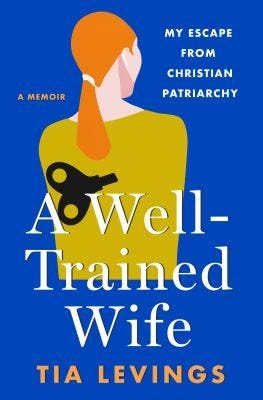
A Well-Trained Wife by Tia Levings
This memoir about a marriage inside a fundamentalist patriarchy movement is heavy, and I still finished it in a few days. In the middle of it, Levings talks about aspen trees and the way their roots run together underground, and it stuck with me enough that I made a note to look it up.
My full review is in What I Read in October, along with every other book from the month.
Format: Audiobook (narrated by the author)
Source: Library
Rating: 4 stars
One aspen grove can be one tree
Aspens spread by sending up new trunks from their roots, so a whole grove can turn out to be a single clone, one organism connected underground. The most famous one is called Pando, in Fishlake National Forest in Utah. It has more than 47,000 trunks spread over about 106 acres, weighs around 13 million pounds, and is widely called the heaviest known living organism on Earth.
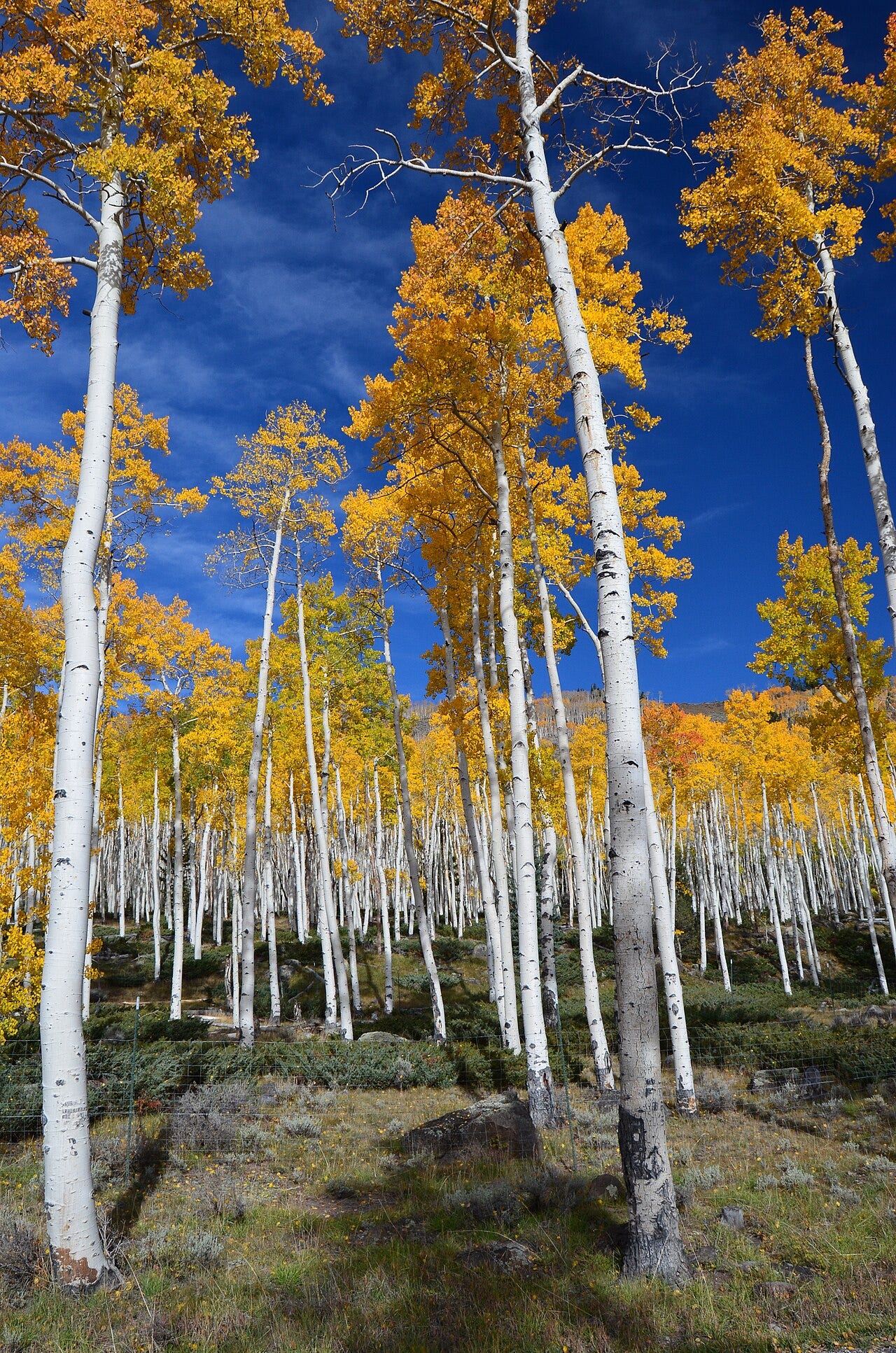

Nobody agrees on how old its root system is. Estimates run anywhere from several thousand years to 80,000, so I'm not going to pretend I know. What is clear is that Pando is shrinking, because deer and elk keep eating the new sprouts before they can grow into trees.
This is the second time a book has sent me down a tree hole. This summer The Fall Risk had me reading about redwoods that sprout brand new trees from burls when the trunk gets damaged. Apparently trees are just better at surviving than I realized.
Grab a copy of A Well-Trained Wife
Borrow it if you can. Buy it if you must. And if you're buying, my Bookshop.org link keeps it with the indies.
This Is How It Always Is by Laurie Frankel
A family novel about a little girl named Poppy and her parents trying to do right by her, and somehow it sent me to Google more than any other book this month.
My full review is in What I Read in October, along with every other book from the month.
Format: Audiobook (narrated by Gabra Zackman)
Source: Library
Rating: 4.5 stars
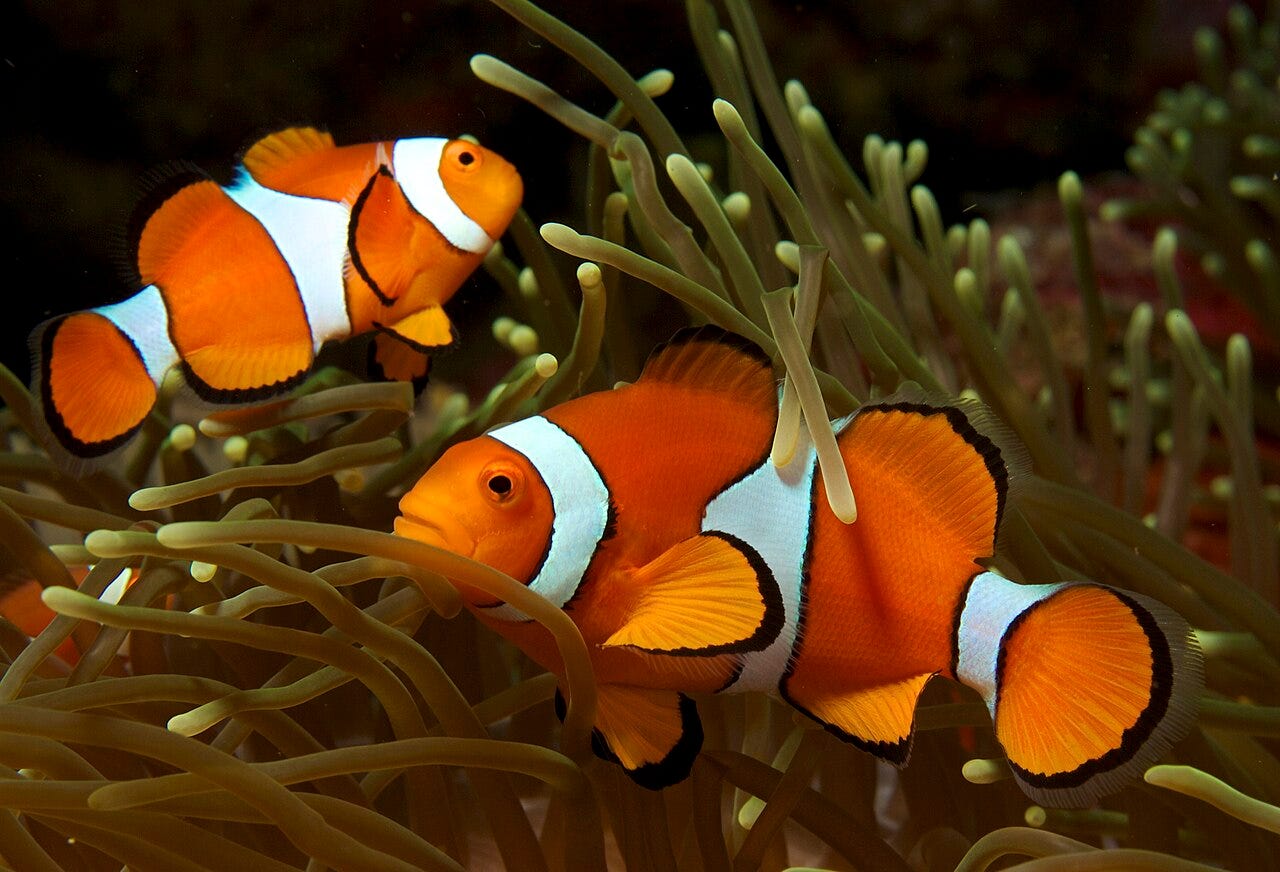
Fish that change sex
There's a section of the book all about fish that change sex partway through their lives, and I needed to know which ones and how. They're called sequential hermaphrodites, and it works a few different ways. Some start out female, and when the dominant male is gone, the biggest female turns into a male, the way bluehead wrasse do. Clownfish go the other direction. They start out male, and if the female in a pair dies, the male becomes the female. About ten known species, like the broad-barred goby, can even switch both ways. What sets it off is usually social, like who's in charge of the group and who's biggest.

The book also kept using the word ichthyologist, and I had no idea what it meant, so I looked that up too. It's a scientist who studies fish. Two weeks later the same word showed up in To Paradise, and for once I already knew it.
⚠️ HEADS-UP FOR THIS IS HOW IT ALWAYS IS
The next section comes from a trip that happens late in the book. It doesn't give away the ending, but if you want to go in knowing nothing, scroll down to An American Marriage.
A color for the day you were born
Thai astrology, which has Hindu influences, gives every day of the week its own color, each tied to a protecting god and a planet. Sunday is red, Monday is yellow, Tuesday is pink, Wednesday is green, Thursday is orange, Friday is light blue, and Saturday is purple.
I was born on a Friday, so my color is light blue. Friday belongs to Shukra, the god tied to the planet Venus, and its blue is linked with charm, compassion and harmony. Thai folk tradition says Friday babies grow up friendly and sociable, a little ambitious, and drawn to creative work like art and music, and I'm not going to argue with the creative part. Every day also has its own Buddha pose, and Friday's is the Contemplating Buddha, standing with arms crossed over the chest, thinking things through before making a big decision. It's folk astrology, not religious doctrine, but I'll take it.
Grab a copy of This Is How It Always Is
I'll always tell you to check the library first. If you'd rather own it, this Bookshop.org link supports independent shops and helps me out a little.
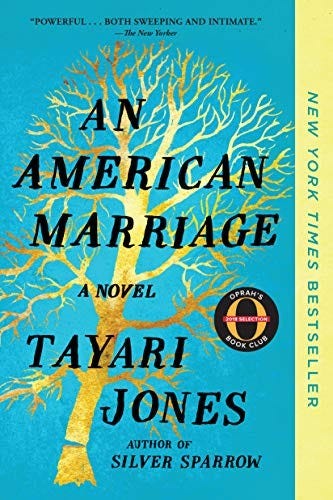
An American Marriage by Tayari Jones
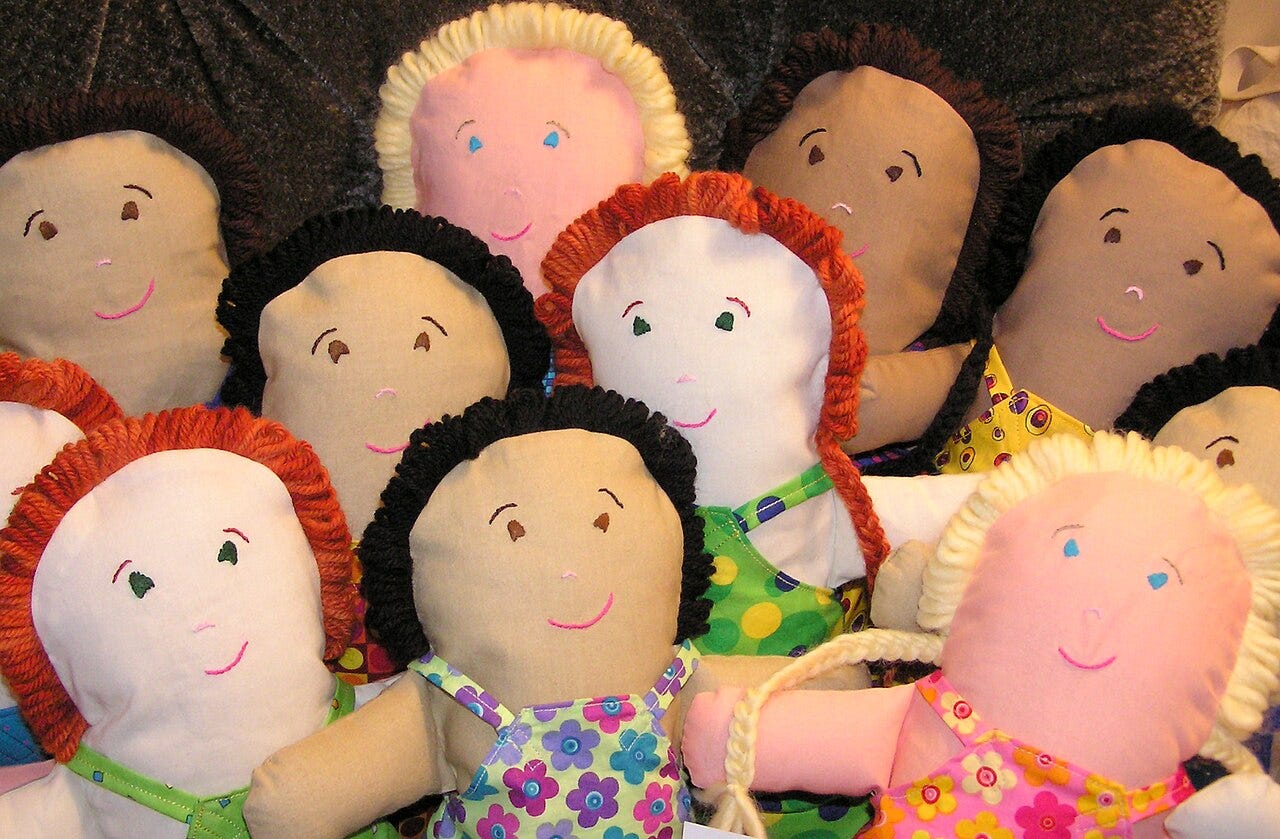
Celestial makes dolls in this book, and the word for them kept coming up on audio. I didn't know it, and I wanted to be able to picture what she was making.
My full review is in What I Read in October, along with every other book from the month.
Format: Audiobook (narrated by Sean Crisden and Eisa Davis)
Source: Library
Rating: 3.5 stars
Poupées
Poupée is French for doll. Celestial sews cloth baby dolls, swaddled so they look like real infants, and they become both her art and her business. Once I knew that, I couldn't picture the book any other way.

Grab a copy of An American Marriage
Get it from the library if you can. If not, Bookshop.org over Amazon, always.
To Paradise by Hanya Yanagihara
I went into this one hoping it would break me the way A Little Life did. Instead I spent a lot of it confused, because the first two stories felt short next to the last one and I couldn't tell if I'd missed how they were supposed to connect.
My full review is in What I Read in October, along with every other book from the month.
Format: Audiobook (narrated by Edoardo Ballerini, Catherine Ho, BD Wong, Feodor Chin and Kurt Kanazawa)
Source: Library
Rating: 3.5 stars
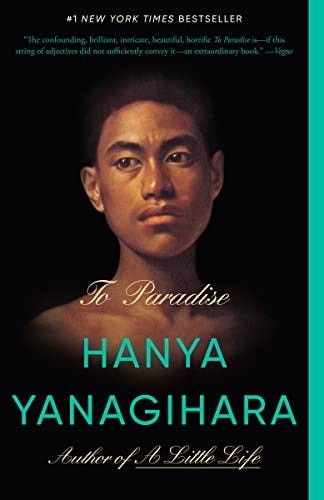
Are the three stories connected?
Yes, just not the way I expected. To Paradise is really three books set a hundred years apart: an alternate New York in 1893, New York and Hawaii in 1993, and a locked down New York in 2093. What ties them together is the same townhouse on Washington Square and the same names, David Bingham, Edward Bishop and Charles Griffith, turning up in every part. Most of them are new people who happen to share the names, not the same characters coming back. There is one real bloodline, though. The scientist Charles Griffith in the last story is the grandfather of its narrator, Charlie.
And no, I wasn't imagining the length. The last story, Zone Eight, takes up about half of the roughly 700 pages. So I didn't miss some hidden plot that ties it all together. The echoes are the point, the same house and the same names getting another try in a different century.
The library had it for me, and it'll probably have it for you too. If you want your own copy, my Bookshop.org link sends the sale to an indie.
There There by Tommy Orange
There There sent me to Google three times, and the first one scared me a little.
My full review is in What I Read in October, along with every other book from the month.
Format: Audiobook (narrated by Darrell Dennis, Shaun Taylor-Corbett, Alma Cuervo and Kyla Garcia)
Source: Library
Rating: 3.5 stars
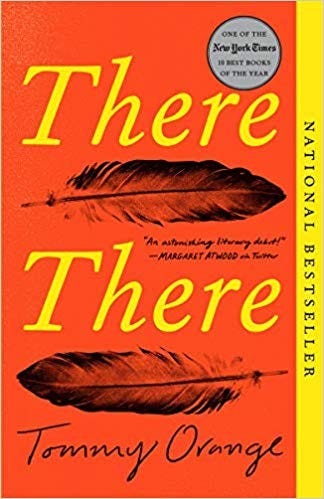
Can you really 3D print a gun that gets past a metal detector?
In the book, plastic guns get made on a 3D printer so they can get through metal detectors, and they still fire real bullets. I had to know if that was happening in real life. It is. In 2013 a group called Defense Distributed released plans for the Liberator, a pistol printed almost entirely in plastic. U.S. law requires a gun to have at least 3.7 ounces of metal so detectors can catch it, and the Liberator was designed with a block of metal to meet that rule, except the block does nothing and can be taken right out. The bullets themselves are ordinary ammunition. That was a scary one to read about.
Is the internet making my memory worse?
There's a part where a character talks about the internet making our brains forget, because we don't have to remember anything when we can just look it up, and it brings up the hippocampus, the part of the brain that handles memory. I've felt like my memory has gotten worse over the years, so I went looking.
There's real research behind the idea. In 2011, psychologists led by Betsy Sparrow at Columbia published a study in Science showing that people are more likely to forget information they think they can find online later, and better at remembering where to find something than the thing itself. They described the internet as a kind of outside memory. The study is about what we choose to hold onto, though, not proof that the internet is damaging anyone's brain. I'm still not sure which one to blame for mine.
How did Oakland end up with such a big Native community?
Every main character in There There is Native and living in Oakland, and I wanted to know how that came to be. A big part of the answer is a federal program. Starting in 1952, the Bureau of Indian Affairs worked to move Native families off reservations and into cities, and the Indian Relocation Act of 1956 pushed it further, with promises of jobs, training and housing that often didn't come through. The Bay Area was one of the main destinations.
Oakland's Intertribal Friendship House opened in 1955 to help the people arriving, and it's still one of the oldest urban Native centers in the country. Today the Bay Area has one of the largest intertribal Native communities anywhere, with people from tribes all over the country.
Check Libby first, it's a short listen. If you'd rather own it, this Bookshop.org link goes to the indies.
Still on the trail: Lonesome Dove by Larry McMurtry
I don't know why this book has taken me over a month to finish. I'm so close, and I badly wanted to include what it sent me to Google in October, but alas, I have 100 pages left at the time I’m writing this recap, so you'll have to wait until next month. I can tell you it's going to be a 4 or 5 star read for me, and there's at least one search in there waiting for November.
All six October books sent me to Google at least once, and every one of them is in the full October recap, with the reviews and the month in numbers.
Subscribe and the November one lands in your inbox at the start of December.
This is why I love reading. One story turns into ten tabs open.
Tell me in the comments: what's the strangest thing a novel has ever sent you to look up?