


Seven books in August and six separate times I stopped reading to go look something up. Four of them are here. One of the other two, a goddess asking Zeus to start a war because the earth had gotten too heavy to carry, is going into a future piece about the ancient world instead, because it deserves more room than a section. The last one I could not get a straight answer on, so it is staying in my notes until I can. What is left is still a strange spread: a civilization that fell apart three thousand years ago, a job I did not know was a job, a hostage crisis I was certain had been invented for a novel, and the actual color of the most looked-at painting on earth.
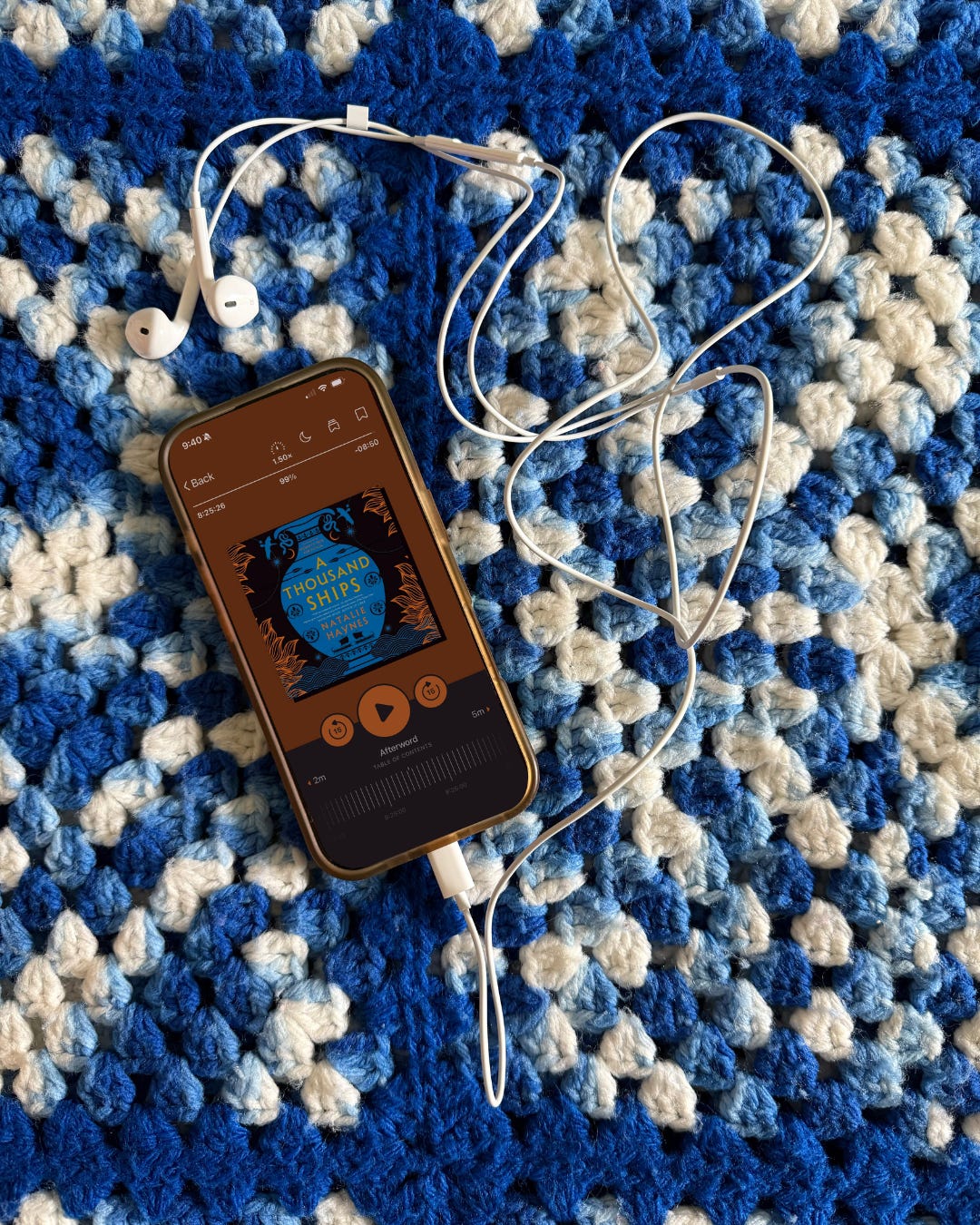
A Thousand Ships by Natalie Haynes
I came to this straight off Stone Blind, because I loved that book and wanted more Haynes immediately. If you liked The Silence of the Girls and wanted it angrier and funnier, this is that. It gives the women of the Trojan War their own space instead of leaving them standing around as scenery, and it left me with the specific feeling of having been handed back a story I thought I already knew.
Wanting more land than you need
There is a section about men taking and wasting more land and resources than they need, and I stopped the audiobook over it. Not because it is a surprising idea, but because it is sitting inside a story set right at the end of the Bronze Age, and it turns out that is an argument real historians have been having for a long time.
The Late Bronze Age collapse happened somewhere around 1200 to 1150 BCE, and it took down a set of connected societies across the eastern Mediterranean in a span short enough that people still argue about what did it. The candidates are all the ones you would expect, and they are all unsatisfying on their own: prolonged drought, failed harvests, movement of peoples, warfare, and trade networks so interlocked that when one part failed the rest went with it. The version I keep coming back to is the systems argument, which says no single thing killed it. The whole thing was simply built too tightly to survive any one bad decade.
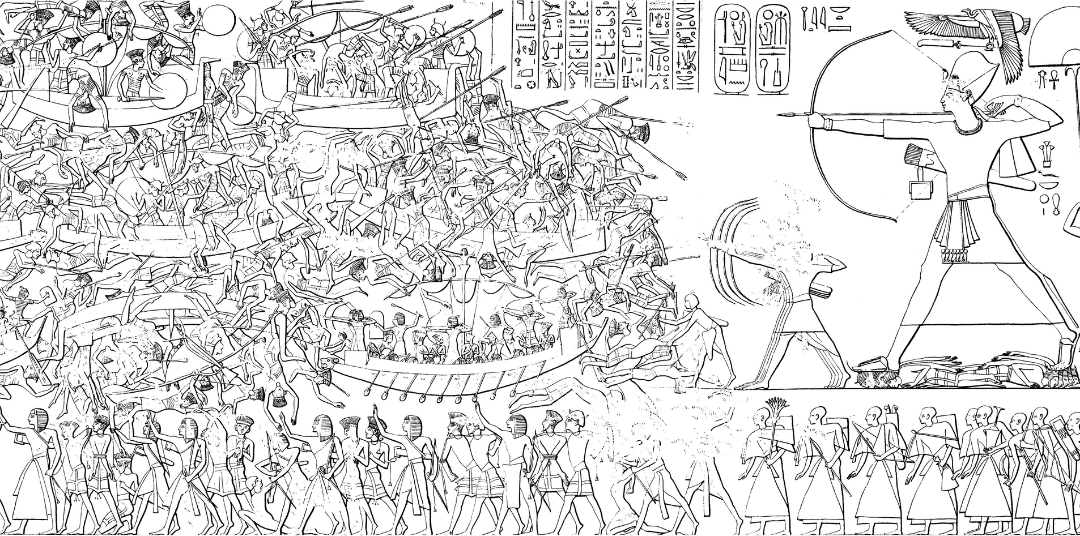
The Egyptians recorded fighting off the Sea Peoples on the northeast wall of Ramses III's mortuary temple at Medinet Habu, c. 1180 BCE. It is one of the few things anyone wrote down while the world was coming apart. Drawing of the relief, via Wikimedia Commons
So a novel about a mythological war is set at the exact hinge where a real world came apart, and a line about taking more than you need lands differently once you know that. I do not think Haynes put it there by accident.
I have not written the essay this wants to become. It is sitting there and I know it, and I am not ready.
Format: Audiobook (narrated by Natalie Haynes)
Source: Library
Rating: 4 stars
Grab a copy of A Thousand Ships
Library first, always. But if you’re buying anyway, my Bookshop.org links support indie bookstores and a sliver comes to me. No pressure.
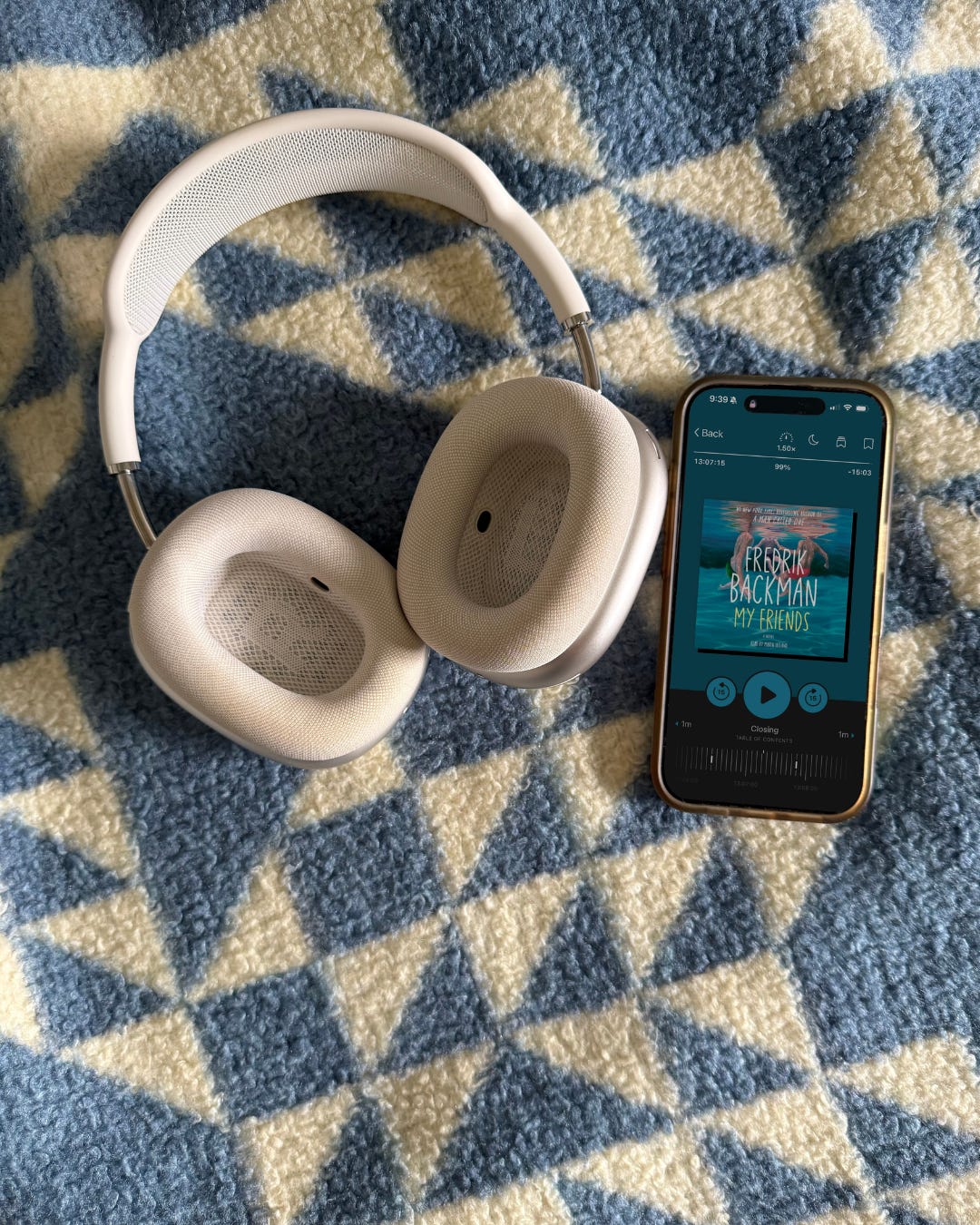
My Friends by Fredrik Backman
My first Backman, and now one of my favorite books I have ever read, which is an annoying thing to say about a book everyone already told me to read. A girl piecing together what happened around a famous painting and the four teenagers who were there when it was made. If you loved A Man Called Ove but wished it hurt more, go here. It left me wanting to stand in front of a painting that does not exist, and irritated that I could not.
The name on the cover did not write the sentences I loved
Here is the thing that sent me looking. What got me about this book was the cadence. Not the plot, the rhythm of the sentences, the way they carried me instead of just informing me. I finished it, went to look something up, and found out it was written in Swedish. The original is called Mina vänner. The English I fell in love with was made by a translator named Neil Smith.
I had a genuinely embarrassing moment of realizing I had spent thirteen hours admiring prose and giving all the credit to a man who did not write those particular words in that particular order.
Literary translation is a craft and a career, and it is not a swap of one word for another. Rhythm, register, where a sentence breathes, what a joke does in one language and what you have to build to make it do the same thing in another. Translators make thousands of decisions a book, and the good ones are invisible in exactly the way that means nobody thanks them.
I now check the translator’s name before I start anything translated. That is a permanent change and it took one book.
This one is also going into a words and etymology grouping I have been slowly building, because it turns out I google language more than I google history.
Format: Audiobook (narrated by Marin Ireland)
Source: Library
Rating: 5 stars
Borrow it if you can. Buy it if you must. And if you’re buying, my Bookshop.org link keeps it with the indies.

Bel Canto by Ann Patchett
Third stop on a Patchett run I only took because Threads told me to after I DNF’d Tom Lake earlier this year. A birthday party in an unnamed South American country, an opera singer, a Japanese businessman who came only to hear her sing, and then armed men coming through the air vents after a president who never showed up. If you liked the slow claustrophobic middle of Station Eleven, this is that feeling for four hundred pages.
I paused it a third of the way in to ask whether any of this was real
It is.
In December 1996, members of the Túpac Amaru Revolutionary Movement took over the Japanese ambassador’s residence in the San Isidro district of Lima, Peru, during a party for Emperor Akihito’s 63rd birthday. Fourteen militants. More than six hundred guests inside.
About half of the hostages were released within days. Seventy-two were held to the end, and the end took a long time to arrive. The siege ran 126 days. In that time the thing everyone remembers happened, which is that the hostages and their captors began to know each other, because four months is longer than most people can sustain being strangers.
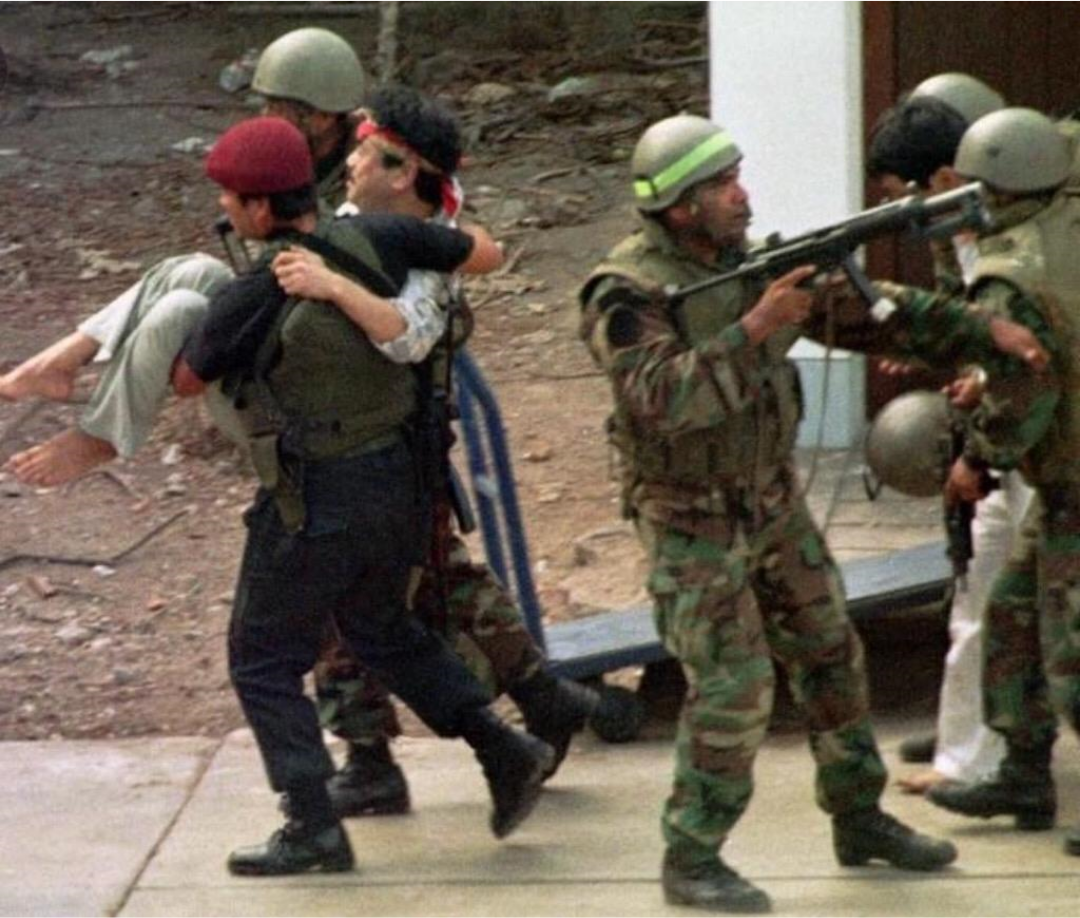
A commando carries a hostage out of the Japanese ambassador's residence in Lima on 22 April 1997, at the end of 126 days. Photo credited to César Astudillo, archives of the Peruvian Joint Command of the Armed Forces, CC BY-SA 4.0, via Wikimedia Commons
It ended on 22 April 1997, when roughly 140 Peruvian commandos came up through tunnels that had been dug under the building. The operation was called Chavín de Huántar. All fourteen militants were killed. One hostage died, a Supreme Court justice named Carlos Giusti Acuña. Two soldiers died, Lieutenant Colonel Juan Valer Sandoval and Captain Raúl Jiménez Chávez.
I had gone in knowing nothing, which I still think is the right way to read this book, and then found out the least believable part was the part that was reported.
Format: Audiobook (narrated by Anna Fields)
Source: Library
Rating: 4 stars
I’ll always tell you to check the library first. If you’d rather own it, this Bookshop.org link supports independent shops and helps me out a little.

Beartown by Fredrik Backman
Somebody in this book asks, with a completely straight face, whether da Vinci got a discount on brown paint. It is a throwaway piece of sarcasm inside a novel about a hockey town, and I could not tell whether it was a joke everybody already knows or something Backman made up, so I went looking. On the book itself: my second Backman of the month, and it is Friday Night Lights rewritten as literary fiction and moved to a Swedish forest. A five star that is not remotely comfortable.
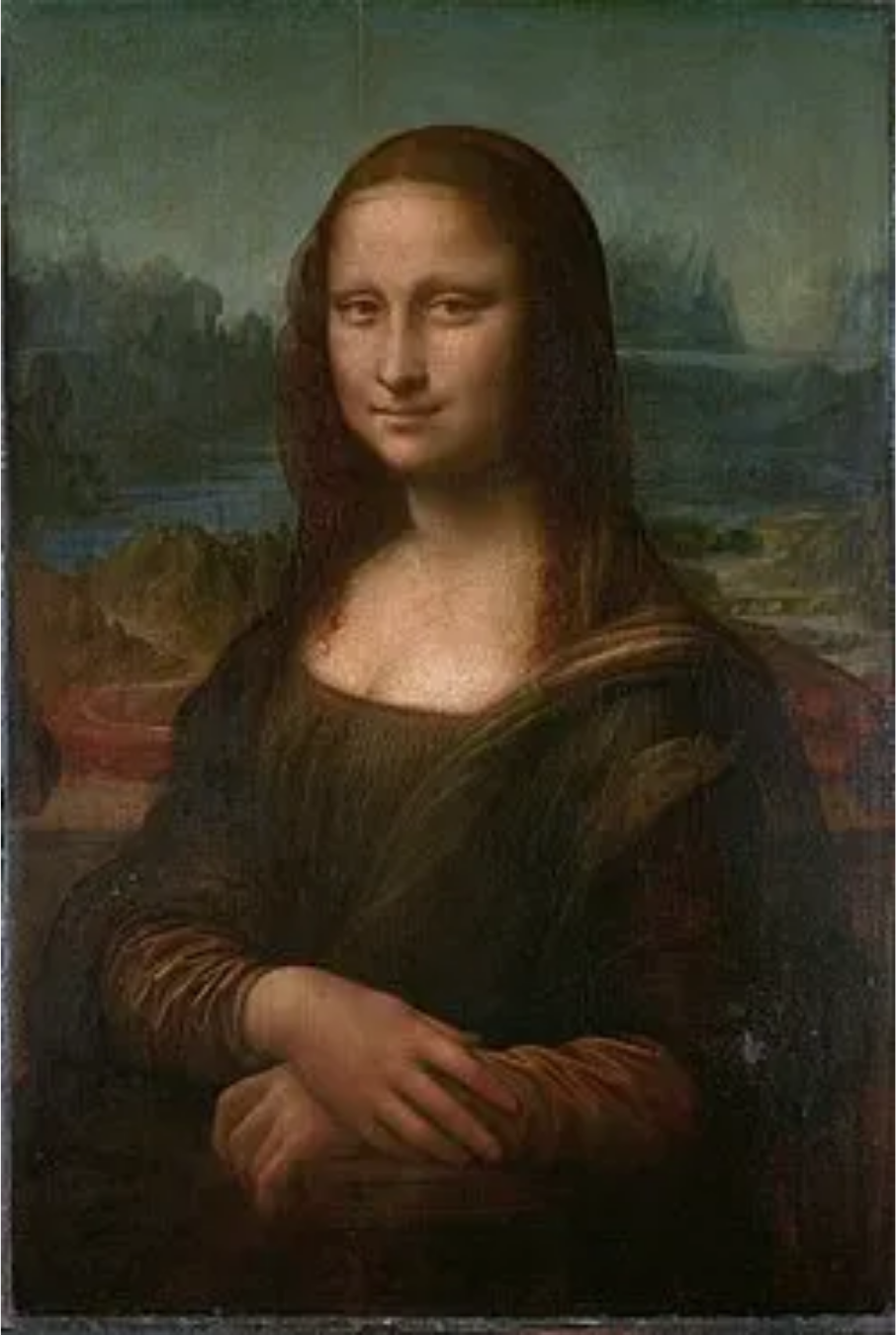
Leonardo da Vinci, Mona Lisa, c. 1503 to 1506. Louvre. via Wikimedia Commons
The Mona Lisa really is brown, and there is a second one in Madrid that is not
The first answer is that it does not appear to be a stock art world joke. I could not find it anywhere as an established line, so I am giving it to Backman.
The second answer is the one that ate my evening, because the premise is completely correct. The Mona Lisa does read brown and dim and murky, and that is not Leonardo’s palette. It is roughly five centuries of varnish going yellow on top of his paint, and nobody is going to strip it off, because the risk of taking the painting with the varnish is not one the Louvre will ever accept.
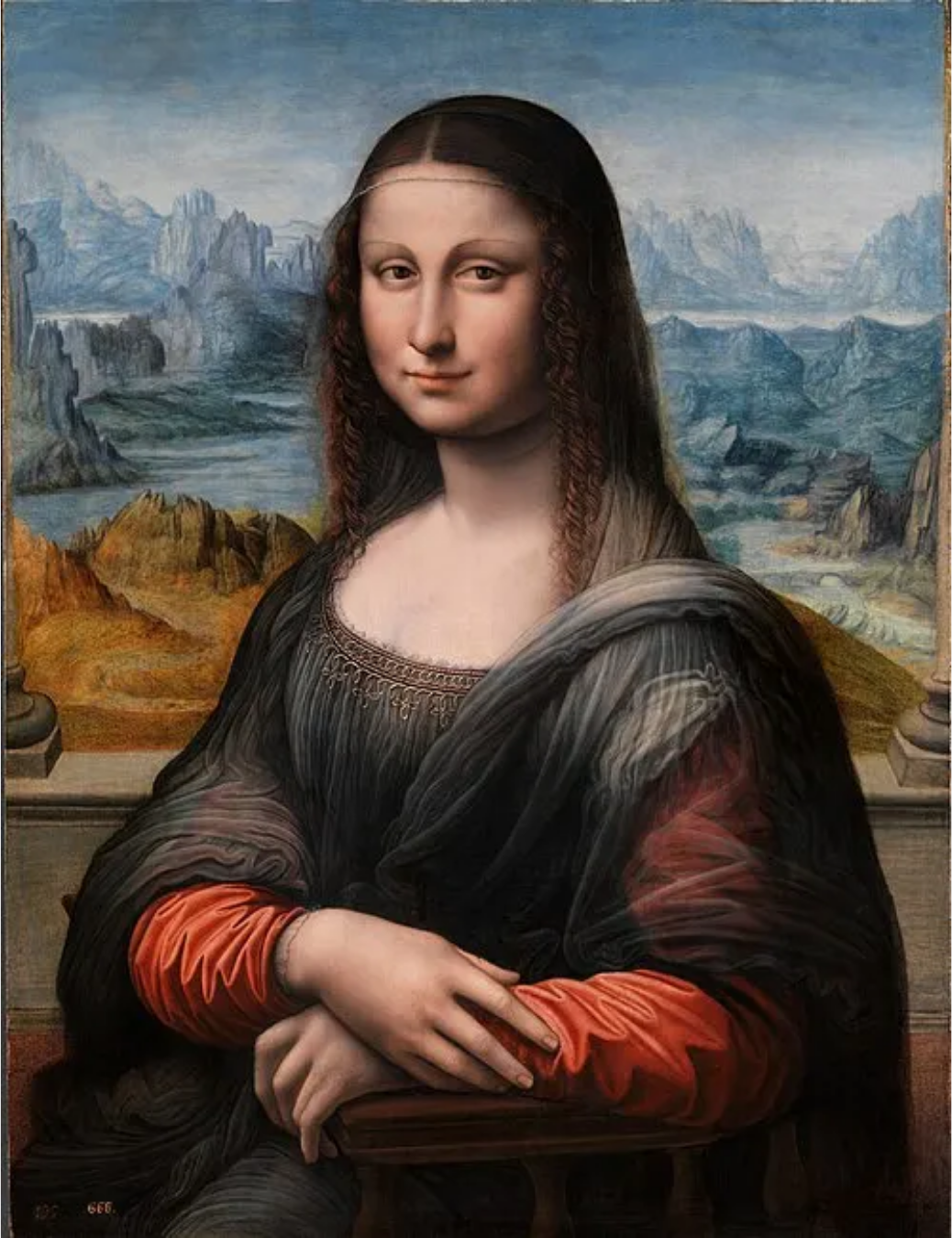
The Prado copy, painted in Leonardo’s studio at the same time and cleaned of its overpaint in 2012. Museo Nacional del Prado, via Wikimedia Commons
Which would be the end of it, except there is a second one. One of Leonardo's own students, most likely Salai or Melzi, painted a near twin alongside the original starting around 1503, and that panel hangs in the Prado in Madrid. For a long time it sat there under a flat black background that somebody added later. In 2012 conservators took that overpaint off and the landscape came back, and so did the color. In places it is better preserved than the Louvre painting, down to the spindles of her chair, the frills across her chest, and the veil at her left arm.
So we do know what she looked like before she went brown. It just is not the famous one.
Format: Audiobook (narrated by Marin Ireland)
Source: Library
Rating: 5 stars
A note on my links: I'm a library person first, always. If you can borrow it, borrow it. But if you're buying anyway, my Bookshop.org links support indie bookstores and send a little back my way. Both can be true.
Four books sent me looking things up in August. Three more went by without a single question, and all seven are in the full August recap, with the reviews and the month in numbers.
Read the August recap
Subscribe and the September one lands in your inbox at the start of October.
This is why I love reading. One story turns into ten tabs open.
Tell me in the comments: what is the last thing a novel made you go look up, and did it turn out to be real?