


Three books I read this year sent me googling the same thing, and I didn’t notice until I lined up my search history: the secret, physical ways people have hidden love. One was painted on a bride’s hands and another was worn under a dress. The third was buried under a floor. Here is what I found, and which parts turned out to be real.
A name hidden in the henna
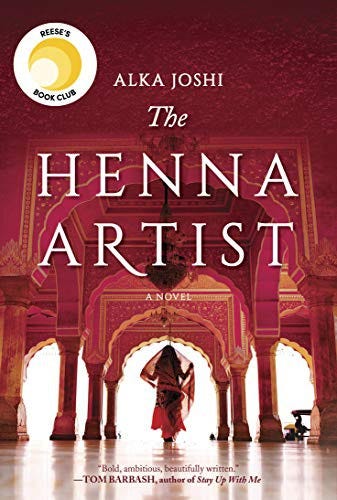
The Henna Artist by Alka Joshi follows Lakshmi, who paints henna for the wealthy women of 1950s Jaipur. I listened to it on audio in January, my first Alka Joshi, and gave it four stars. I came away realizing I knew almost nothing about henna, so I looked it up.
In the book, Lakshmi uses designs she learned from courtesans, painted on her clients’ hips and backs, and her clients swear those designs make their husbands want them more. She paints one woman’s belly to help her conceive and slips fertility herbs into the sweets she serves. The courtesans who taught her even wrote a name into their henna as a trick.
Some of that is the novel. I couldn’t find a real tradition of placing henna on the body just for a husband, and henna is not an actual way to get pregnant, though the paisley shape you see in bridal designs does stand for fertility. But the part I loved most is real. In many Indian and Pakistani weddings, the groom’s name or initials are hidden inside the bride’s henna, tucked between her fingers or at her wrist, and he has to find them.
Bridal henna is its own thing, too. It is far more detailed than everyday henna, it runs up the forearms and onto the feet, and it goes on at a mehndi party before the wedding. There is an old saying that the darker the stain, the more the groom loves her.
My review: The Henna Artist was one of those listens where everything clicked: the story, the pacing and especially Sneha Mathan’s narration. The era and setting were completely new to me, and I learned so much about henna, post-war India and what was expected of women without it ever feeling like a history lesson. It made me angry at the unfairness women lived with, and it still found room for warmth, small kindnesses and messy family drama. By the end I knew I wanted the rest of the trilogy.
Format: Audiobook (narrated by Sneha Mathan) | Source: Library | Rating: 4 stars
Grab a copy of The Henna Artist. I’ll always tell you to check the library first. If you’d rather own it, this Bookshop.org link supports independent shops and helps me out a little.
A love note worn against the skin
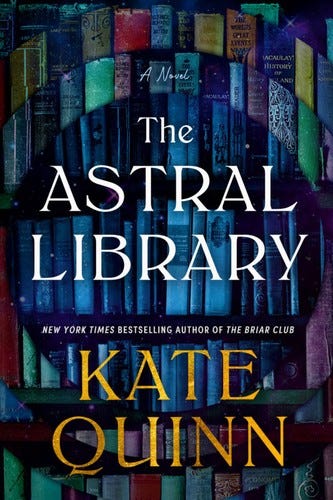
There is a scene in The Astral Library by Kate Quinn about corsets, and I came away from it thinking women used to carve naughty scenes into the bones of their corsets and give one to their lover. When I looked it up, it was the other way around.
The piece is called a busk. It was a long, flat strip of wood, whalebone or ivory that slid into a channel down the front of a corset or bodice, right against a woman’s chest and stomach. In the 1600s, men bought or carved busks for the women they were courting, and they covered them in love notes, hearts and little drawings of a shared house. Some of the inscriptions even have the man saying he is jealous of the busk, because it gets to be that close to her. It wasn’t explicit, but everyone understood what it meant, and there were plenty of bawdy jokes about it.
The women had their own token to give back. A busk was held in place with a small ribbon called a busk-point, and women gave those to their suitors as a sign of affection and promise. Two centuries later, sailors on whaling voyages were still carving busks out of whalebone to bring home to their sweethearts.
I wrote about a very different part of The Astral Library in The Bookmark I’d Put in My Own Life.
My review: The Astral Library is Kate Quinn’s first step into magical realism. Alix, who grew up in foster care, stumbles through a hidden door in the Boston Public Library into a library where you can escape into your favorite books while time stops outside. What works is the love, because Quinn clearly adores books and libraries and says out loud why book bans and library closures matter. What kept it at three stars was the emotional middle. I felt the cleverness of the structure more than I felt Alix’s longing, and I admired it more than I fell for it. If you loved The Midnight Library or just love a book that loves books, it’s a warm, bookish comfort read.
Format: Physical book | Source: Library | Rating: 3 stars
Grab a copy of The Astral Library. Borrow it or buy it, your call. The buy link goes through Bookshop.org and the indies.
Clothes buried under the floor
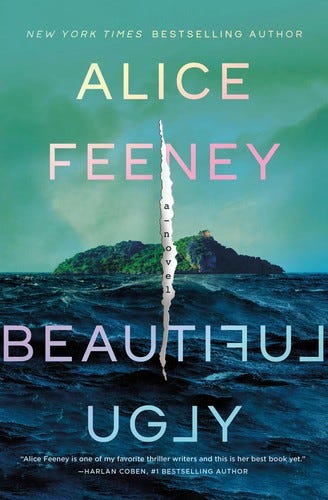
Beautiful Ugly by Alice Feeney already sent me down one rabbit hole, but there was a second detail I couldn’t shake. A character describes a renovation where they found clothes buried under the floor of an old house, carefully laid out with money, keepsakes, food and drink, and linens over the top. It wasn’t a time capsule and it wasn’t a grave. In the book it is called the buried lovers.
The idea is that if a married couple thought they would be separated forever, by illness or war, they buried a set of their clothes together under their home so they could find each other in the afterlife. And there is a curse: if you dig up a pair of buried lovers and separate them, they will come for your love too.
I googled it right away, and what I found was scattered. It isn’t a well-documented ritual with a history page and citations. What is real is that clothes, shoes and personal objects turn up hidden in the walls and under the floors of old homes across England and Ireland, and shoes are the most common find of all. People hid them for protection and luck. Whether the buried lovers is a real named custom or Feeney’s extension of those real practices, I still can’t say.
It stuck with me anyway. It’s love expressed as logistics: if we can’t be together now, we will prepare the place where we’ll be together later. I finished Beautiful Ugly months ago, and I still think about it.
My review: Beautiful Ugly is a mystery thriller set on a remote Scottish island where only women live, all of them running from the lives they left, until an author named Grady, with secrets of his own, ends up there. Feeney keeps you turning pages even when you’re half sure where it’s going. It dragged for me whenever Grady walked into the same trap again, but the island’s atmosphere and the slow reveal kept me in it. It didn’t wreck me and it wasn’t trying to. It’s a solid, fun thriller for when you need something that moves. My full review is in The Thriller That Understood Love Better Than Most Romance Novels.
Format: Ebook | Source: Library | Rating: 4 stars
Grab a copy of Beautiful Ugly. Get it from the library if you can. If not, Bookshop.org over Amazon, always.
Love you weren’t supposed to see
All three of these are love kept out of sight on purpose. A name only the groom goes looking for, a note only she would feel all day, and clothes nobody was ever meant to dig up. None of them were for an audience, and that is exactly why I keep thinking about them.
Which of these three would you have done?
Such an interesting article and I loved what caught your attention in each book! The Henna Artist has been on my TBR forever, and this review makes me want to pick it up finally.