


Back in 2021 I read The Girl on the Train, and I never stopped to think about why Rachel stuck with me. Five years later, Mad Honey gave that feeling a question: whose version of events gets taken seriously, and whose pain gets written off as performance? That question sent me to a short story from 1892, and the short story sent me to a novel about a 1950s housewife. When I lined up everything I've read on the same idea, the tree had been growing the whole time.
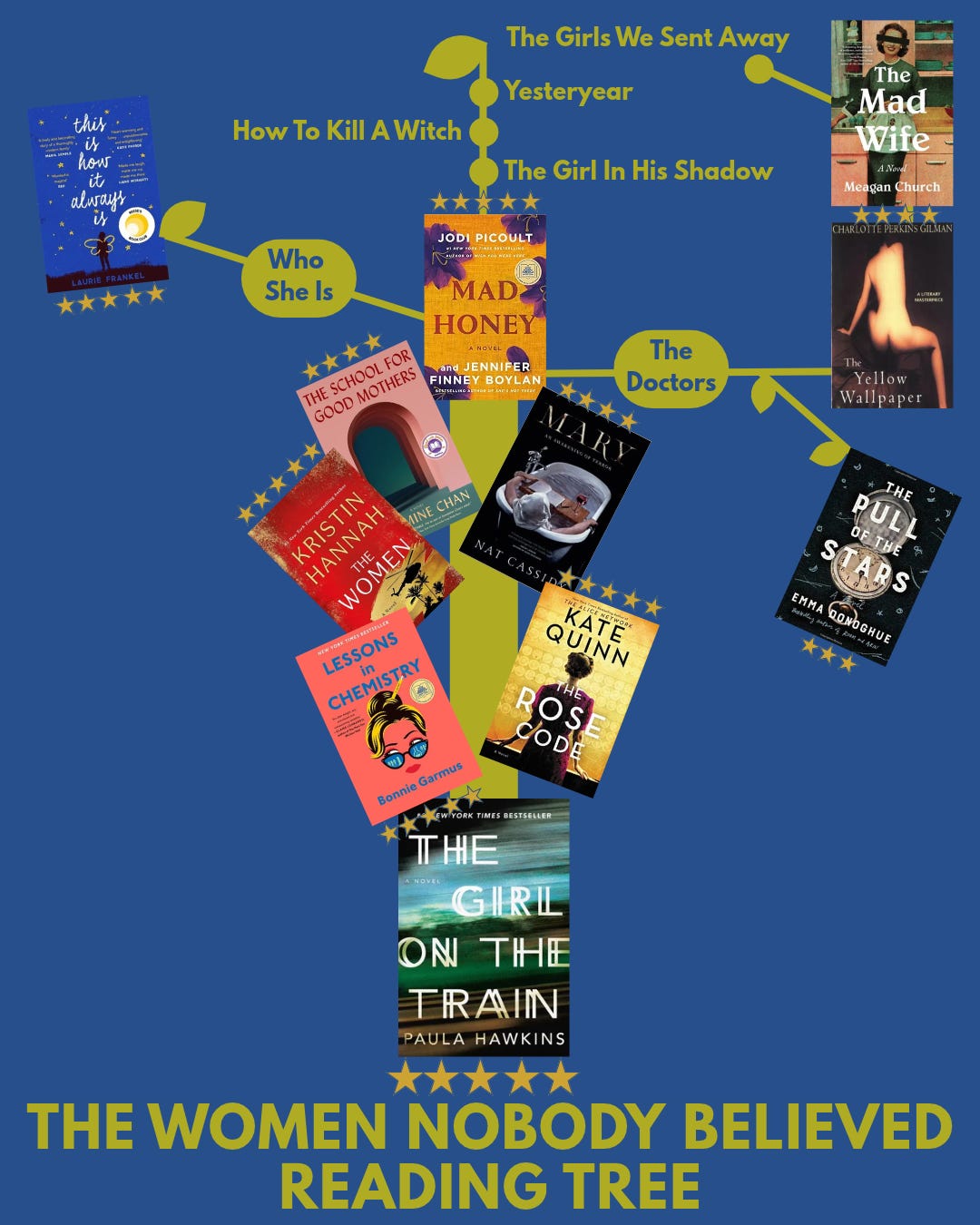
The root is the first book I read. The trunk climbs through five books I found on my own until it reaches Mad Honey, which is where the tree forks. The highlighted line coming off Mad Honey is the chain it actually sent me down. There's also a side branch I didn't expect, which grew out of a different part of Mad Honey.
Where it started: the root

The Girl on the Train by Paula Hawkins
Rachel rides the same commuter train every morning and watches the same couple through their back window, until one day she sees something she shouldn't. Then the woman goes missing. Rachel drinks too much, her memory has holes in it, and the people around her have already decided she's a mess, so when she tries to tell the police what she saw, nobody takes her seriously, including Rachel.
I read this one in print back in 2021, long before I paid attention to what my reading had in common, and it's the first book I can point to where the whole story hangs on whether anyone will believe a woman who can't fully believe herself.
Rating: 5 stars | Format: Physical
The trunk: what happened to them was real
Every book on the trunk is about a woman who knows what happened to her and has to fight to get anyone to take it seriously. I found these on my own over a few years, in this order.
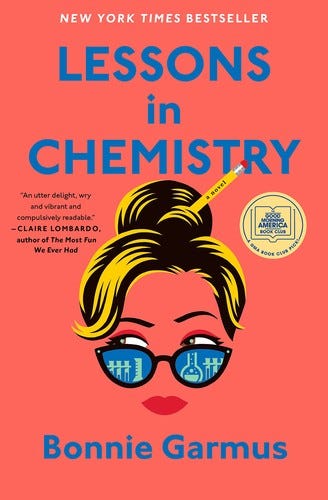
Lessons in Chemistry by Bonnie Garmus
It's the early 1960s, and Elizabeth Zott is a chemist in a lab full of men who take credit for her work and can't decide whether she's a scientist or a secretary. A few years later she's a single mother hosting a TV cooking show, teaching America's housewives chemistry while they think they're learning to make dinner.
I listened on audio in 2023 and kept inventing errands so I could keep going. There's something powerful about stories of brilliant women who came before us in a world that was determined to make them smaller, and Elizabeth never once apologizes for taking up space.
Rating: 5 stars | Format: Audiobook
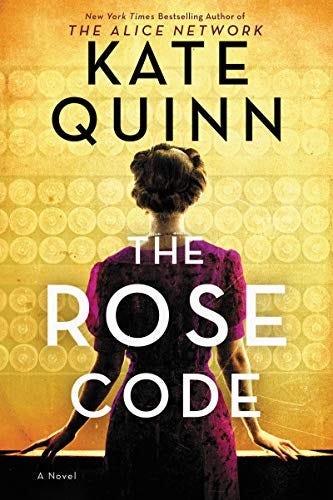
The Rose Code by Kate Quinn
Three very different women end up as codebreakers at Bletchley Park during World War II, sworn to secrecy about everything they do. Years later, one of them reaches out to the other two from an asylum, where she was locked away because of what she knows, and nobody will believe her.
I listened on audio in December 2023, and Kate Quinn is an author I'll read no matter what. This book celebrates what women were capable of at a time when men kept underestimating them, which makes it empowering and infuriating at the same time. Beth's asylum chapters are the ones that still get under my skin.
Rating: 5 stars | Format: Audiobook
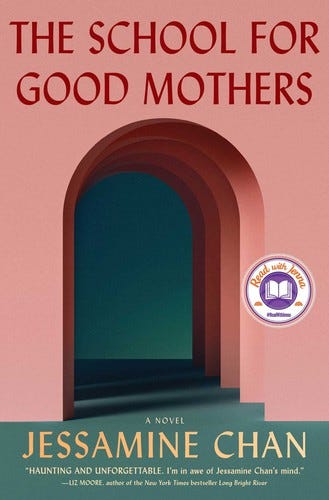
The School for Good Mothers by Jessamine Chan
Frida Liu is an exhausted single mother who has one very bad day, and that's all it takes. The state sends her to a reform school where mothers practice on dolls programmed to cry, and a panel of strangers decides whether she's fit to raise her own daughter.
This was a hard one to sit with as a mother. Frida makes one bad call, and the book never lets you forget how fast a system decides that one moment is who she is. I read it in print, and I kept thinking about how every parent has a worst day that would look terrible written up in a report.
Rating: 4 stars | Format: Physical
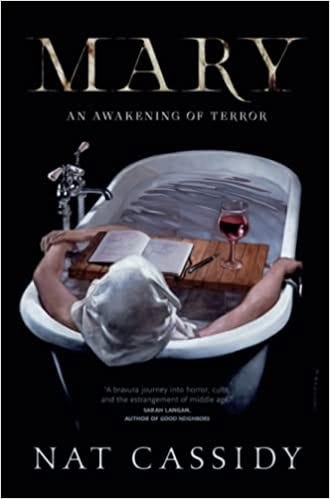
Mary by Nat Cassidy
Mary Jones is almost fifty, single and just let go from her job at a Manhattan bookstore, so she heads back to the desert town she grew up in to take care of her aunt. She can't sleep, she wakes up drenched in sweat, her mind feels foggy and she's started hearing voices. Everything happening to her looks like menopause, the easy explanation, until it very much isn't.
I listened to this one on audio and went in blind, with no idea Mary's visions were tied to perimenopause. Now that I know, I read the whole book differently, and I'm partly just grateful my own symptoms seem mild.
Rating: 4 stars | Format: Audiobook
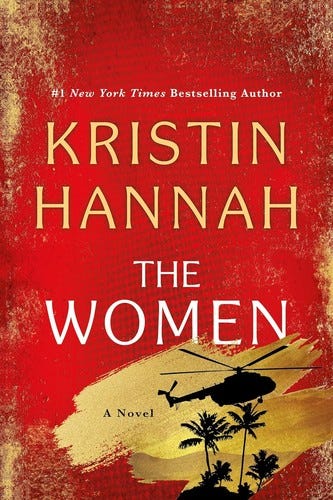
The Women by Kristin Hannah
Frankie McGrath is a sheltered twenty-year-old nursing student when she joins the Army Nurse Corps in 1965 and follows her brother to Vietnam. She survives the war, and then she comes home to a country that would rather forget it. When she finally goes to the VA for help, she's told that no women served in Vietnam.
That line made me furious on Frankie's behalf. She had held soldiers while they died, and the people whose job was to help her told her she'd made it up.
Kristin Hannah is one of my all-time favorite authors, and this one reinforced that all over again when I listened on audio in August 2024. The story gets heavier and more complex as it goes, and even when it hurts you want to keep listening. It honors experiences that were overlooked for far too long, and the line about no women serving is the whole tree in one sentence.
Rating: 5 stars | Format: Audiobook
The fork: Mad Honey

Mad Honey by Jodi Picoult and Jennifer Finney Boylan
Olivia McAfee is a beekeeper starting over in a small New Hampshire town after leaving an abusive marriage. Lily Campanello has just moved there with her mother, and she and Olivia's son Asher fall in love. Then Lily is found dead, Asher is accused of killing her, and the two women's chapters slowly tell you what really happened.
I listened on audio from my library in January expecting a standard Picoult legal thriller and got something much more layered and much more devastating. The dual narration isn't a gimmick, it's structural, and you need both women to understand the truth. It also sent me down the rabbit hole of where the word "hysterical" comes from, which is all in Things I Googled While Reading About Hysteria.
Rating: 5 stars | Format: Audiobook (Library)
Mad Honey mentions The Yellow Wallpaper, and I went and read it that same night. That's where the highlighted line on this tree starts.
The highlighted line: the doctors
These are the books Mad Honey actually handed me, one after the other. Both are about a woman whose doctor decided what was wrong with her before she finished talking.
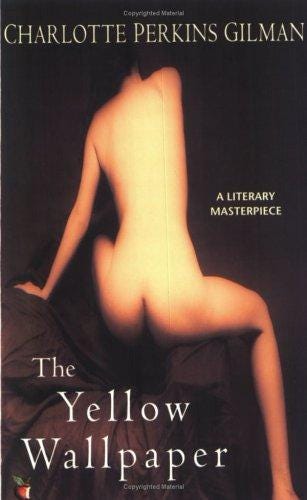
The Yellow Wallpaper by Charlotte Perkins Gilman
A woman is confined to a rented room by her physician husband for a rest cure, no work, no writing and no visitors, and she slowly comes apart while staring at the wallpaper. Gilman wrote it in 1892 after her own doctor prescribed the same cure for her postpartum depression.
Her doctor was S. Weir Mitchell, the most famous nerve specialist in America, and his rest cure was the standard treatment for women like her. That meant weeks in bed, cut off from family, fed a diet heavy on milk, and not allowed to read or write. Gilman said he sent her home with orders to live as domestic a life as possible, allow herself two hours of intellectual life a day, and never touch pen, brush or pencil as long as she lived. Men with the same diagnosis were often sent out West to ranch, hunt and write about it.
It reads like horror because it is horror. I read it free online through Project Gutenberg, which is the link above, and it takes about twenty minutes. I haven't stopped thinking about it since.
Rating: No stars, never logged | Format: eBook (free on Project Gutenberg)
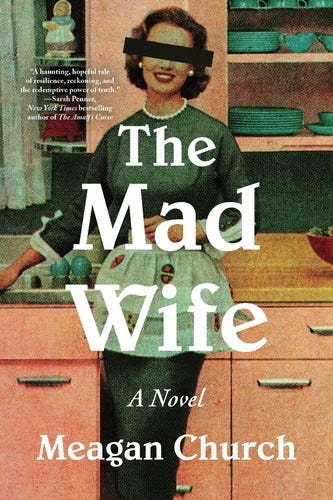
The Mad Wife by Meagan Church
It's 1955, and Lulu Mayfield has the perfect house in a perfect suburb and a brand-new baby, and something is slipping. The men around her have a name for women like her, and a pill for it.
I listened on audio from my library, and The Yellow Wallpaper is exactly why I picked this one up, because it's the same story sixty years later: a doctor deciding a woman's problem is her nerves instead of something real. I didn't see the ending coming until it was already there, and I'm not giving you any more than that.
Rating: 4 stars | Format: Audiobook (Library)
A sibling on the same limb
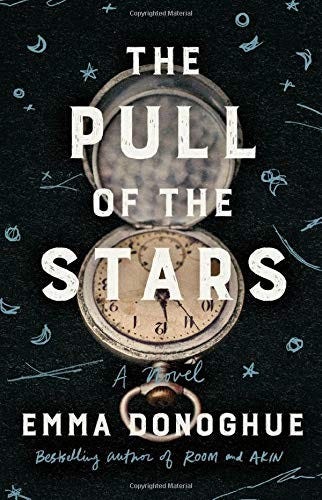
The Pull of the Stars by Emma Donoghue
Three days in 1918 in a tiny Dublin maternity ward set aside for pregnant women sick with the flu, with one overworked nurse holding it together. Nothing on this tree sent me to it, but it sits right next to the doctors: women in a medical system that was already failing them before the pandemic arrived.
The whole book happens in a converted supply room with three beds, and Donoghue names each section after a color the flu turns its patients. One of the doctors, Kathleen Lynn, was a real woman, and the police were looking for her as a rebel while she was treating patients. Most of the mothers in those beds have already had more babies than their bodies can handle, and nobody asked them whether they wanted another.
I read it as an ebook from my library. Almost the whole book stays inside that one small room over three days, so the first two thirds moved slowly for me even though I cared about Julia, and then the ending came so fast it felt rushed. It landed at three stars.
Rating: 3 stars | Format: eBook (Library)
A side branch I didn't expect
Mild spoiler for Mad Honey ahead.
Lily, the girl at the center of Mad Honey, is transgender, and the book is as much about who believes her about who she is as it is about who believes Olivia. That thread grew a branch of its own.
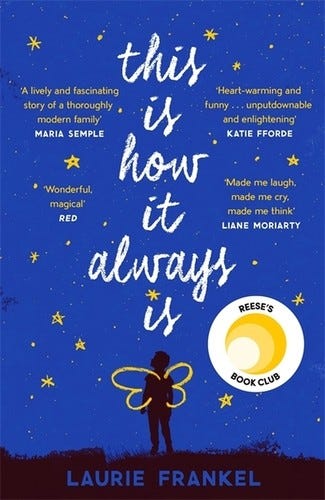
This Is How It Always Is by Laurie Frankel
Rosie and Penn have four boys when their fifth, Claude, starts telling them he wants to be a girl. Claude becomes Poppy, and the family moves to Seattle and keeps it a secret, which works right up until it doesn't.
It was an October listen that nothing sent me to. I'd just heard it was good somewhere, and it was available on Libby, so I listened on audio from my library. It isn't an easy listen because of the subject, but I sped through it because the story kept me so invested, and it was my first Laurie Frankel and won't be my last.
Rating: 4.5 stars | Format: Audiobook (Library)
What my stars were trying to tell me
Five books on this tree got five stars from me, and every one of them is about a woman who keeps pushing until someone has to listen. The ones that sit a little lower keep the disbelief behind closed doors, inside a house, a hospital ward or a reform school. I think what gets me isn't the diagnosis, it's the moment a whole system looks at a woman and decides she's wrong about her own life.
What's next on my shelf
This tree doesn't have a bud yet, because nothing on it has handed me a next book. What it does have is a short stack of books I already own or have on my TBR that belong here.
Yesteryear by Caro Claire Burke. Natalie is a tradwife influencer whose perfect farmhouse life is mostly staged, until she wakes up in an actual 1855 with a husband and children who act like it's always been that way. It's sitting on my shelf right now, and I'm guessing the moment she tries to tell anyone the truth, she becomes the next woman nobody believes.
The Girls We Sent Away by Meagan Church. Same author as The Mad Wife, this time about a teenage girl in the 1960s who gets pregnant and is sent away to a maternity home. After The Mad Wife, I want to see what Church does with the women the decade hid.
The Girl in His Shadow by Audrey Blake. A young woman in Victorian London who is a better surgeon than the men around her, and has to hide it. It's the doctors line from the other side of the table.
How to Kill a Witch: The Patriarchy’s Guide to Silencing Women by Zoe Venditozzi. Nonfiction, and honestly the whole tree in one title.
If you've read a book about a woman nobody believed, tell me which one should come after it.
Keep reading
If this tree was your kind of thing, the Greek Myth Reading Tree is its closest cousin: more women the old stories blamed, finally telling it their way. The Alternate Lives Reading Tree maps a completely different path. And if you want the essays behind the feeling, start with The Villa and the Fear Women Pack in Every Suitcase and Vox and the Week I Counted My Words.
Free through the end of the year
Reading trees will eventually be the heart of what paid subscribers get: a new tree every month and the full vault of past ones. Through the end of 2026, every tree is free for everyone.
What book should be the next branch on this tree?
These are great recommendations and such a cool way to frame them! It is always interesting to see the connections between different books that catch our eye.
This is an excellent article.
I'm going to add Charlotte Woods ‘The Natural Way of Things’ as a good addition to this tree.