


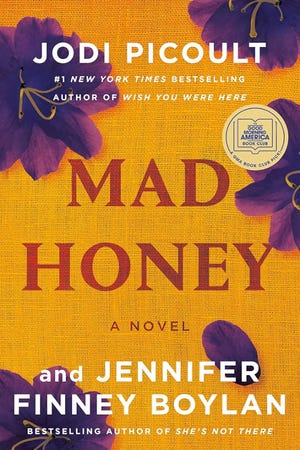
I listened to this one in January and didn’t think much about it going in. Jodi Picoult and Jennifer Finney Boylan plus a dual-timeline, sure, I'll bite. But then the title turned out to be a real thing, and I lost an entire evening to my phone screen.
Here’s where my brain went.
1. Wait, “mad honey” is real?
I typed “mad honey real” into Google expecting to find out it was loosely inspired by something. Instead I found out it’s an actual product with an actual underground market. It’s honey made from rhododendron nectar, and the flowers contain toxins called grayanotoxins. In small amounts, it causes dizziness and hallucinations. In large amounts, it can kill you.
And then I found the military use history and things got wild.
In 67 BC, a king in what’s now Turkey left honeycombs of this stuff in the path of Roman soldiers. They ate it, collapsed and were slaughtered. It’s considered one of the earliest examples of biological warfare, and I sat there staring at my phone like, this was a plot device in a Jodi Picoult novel and it actually happened in 67 BC?
It still happens today. In Nepal and Turkey, people called “mad honey hunters” climb cliff faces to reach the hives of the world’s largest honeybee. There’s a whole market for it. I watched way too many videos of this at midnight.
And it’s not just ancient history or distant countries. During the American Revolution, a beekeeper named Charity Crabtree was tending her hives when a wounded soldier told her to ride to General Washington with a warning about an incoming British attack. When Redcoats showed up to stop her, she beat her bee skeps with a stick until the bees swarmed out, threw the stick at the soldiers, and rode off while they were getting stung. She made it to Washington in time.
I sat with that one for a while. Bees used as a weapon in 67 BC Turkey. Bees used as a weapon in Revolutionary War Philadelphia. And people still climbing cliffs for hallucinogenic honey today. Nine thousand years of humans and bees, and we’ve never stopped finding ways to use them.
2. 3,000-year-old honey that’s still edible
The book mentions honey’s antimicrobial properties, and I thought okay, I know honey lasts a long time. But I didn’t know how long.
Archaeologists have found honey in Egyptian tombs that’s over 3,000 years old. Still edible. Honey’s low water content, high acidity, and natural hydrogen peroxide production make it basically inhospitable to bacteria. Nothing can grow in it.
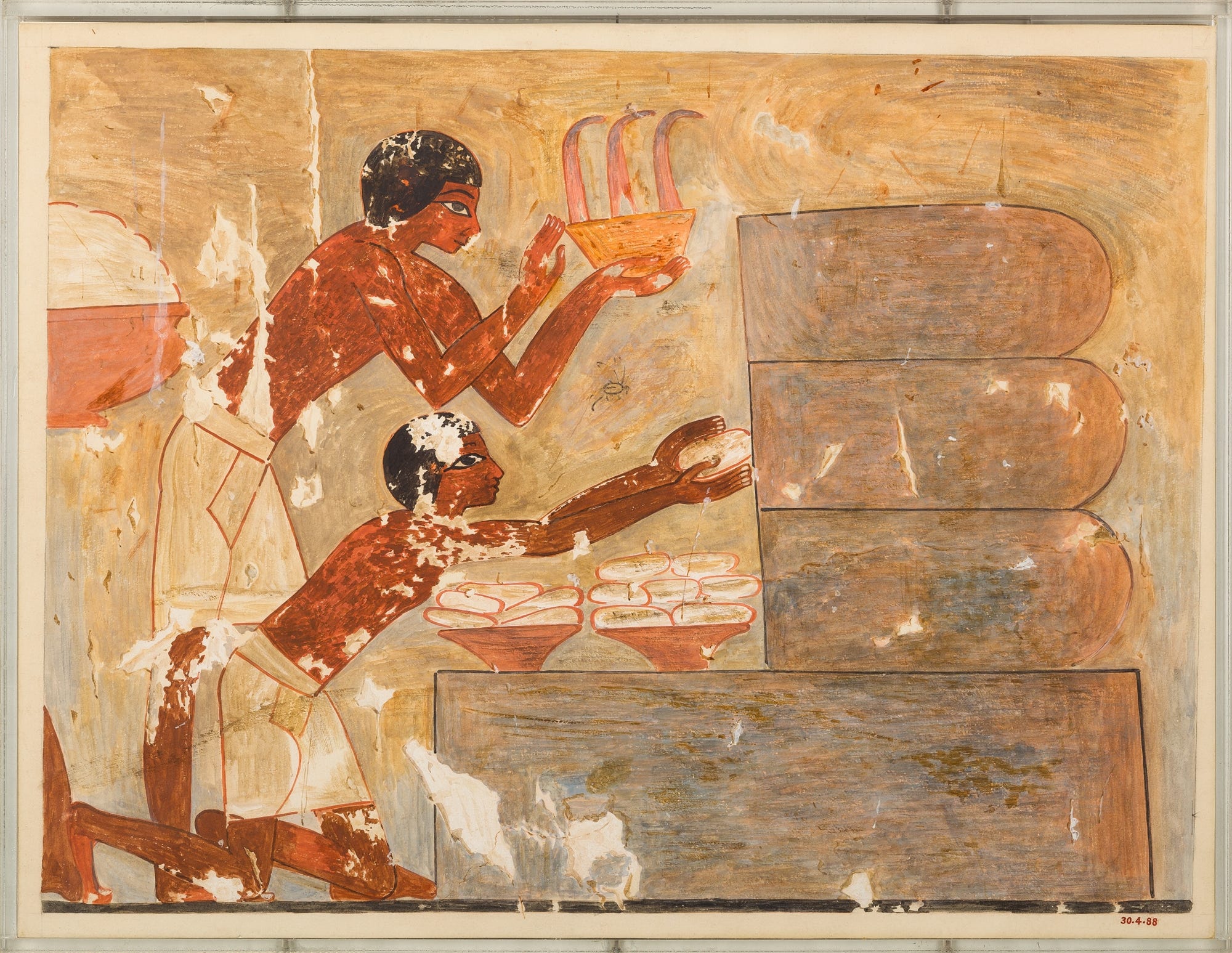
Gathering Honey, Tomb of Rekhmire, c. 1479-1425 BC. Metropolitan Museum of Art, public domain.
That’s how I ended up reading about Alexander the Great supposedly being preserved in a honey-filled coffin for transport back to Macedonia. Whether that one’s true is debated, but the fact that it’s even plausible tells you everything.
3. How far back does beekeeping actually go?
Picoult’s Olivia is a beekeeper, and the book is packed with specific apiary details. I wanted to know how old this practice actually is.
At least 9,000 years. There’s rock art in Spain showing honey harvesting from wild hives around 7000 BC. The ancient Egyptians kept bees in clay cylinders and moved them up and down the Nile to follow the flower blooms. They basically invented migratory beekeeping thousands of years ago.
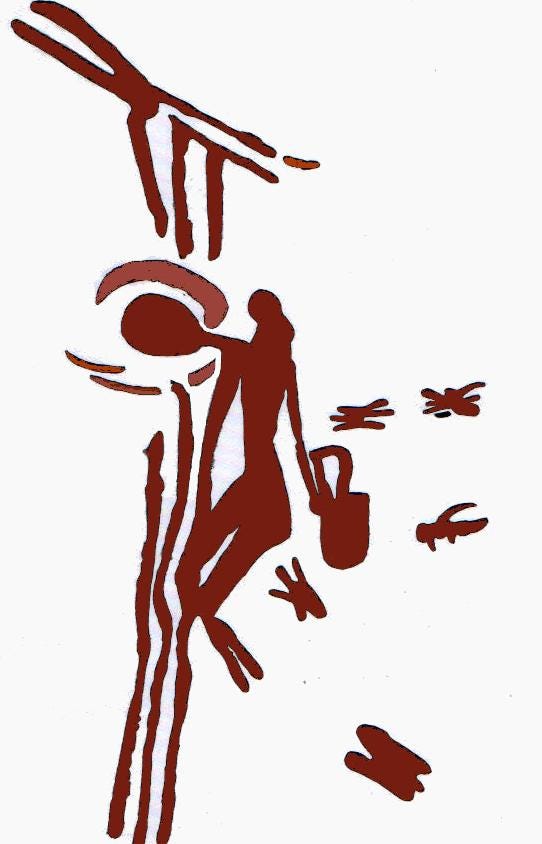
Honey hunter, Cuevas de la Araña, Bicorp, Spain, c. 8000-6000 BC. Drawing by Achillea/Wikimedia Commons, GPL.
The part that got me: before 1851, harvesting honey usually meant killing the bees. The modern hive design changed that. Beekeepers could finally inspect and harvest without destroying the colony. Nine thousand years of beekeeping, and we only figured out how to do it without killing them less than 200 years ago.
Has a book ever made you Google something you were sure was fictional? Tell me which one.
Loved your article and learning about something as bizarre as Mad Honey - these are the kind of facts that don’t matter but make all the difference once you know them! My next dinner party will be hearing all about the Mad Honey Hunters! Here’s to all things weird and wonderful 💫
OMG I love all of this. This is the only kind of "I did X so you don't have to" post I want to see ever in my life.