


I finished Unwind by Neal Shusterman back in March, and I still need to talk about what it does to you if you’re a parent.
The premise is that in a future America, after a second civil war fought over reproductive rights, a compromise is reached. Life is protected from conception to age 13, but between 13 and 18, parents can choose to have their child “unwound,” with every organ transplanted into a different recipient so that life doesn’t technically end. And because you can’t unwind a baby, a mother who doesn’t want hers can “stork” it, leaving it on the doorstep of a family she thinks will give it a good home. If you’re storked, you don’t get to say no. That baby is yours now.
I'll let that sit for a second.
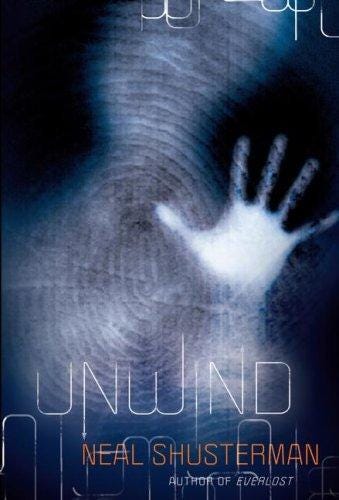
The hard years
If you’ve raised teenagers, or you’re in the middle of it right now, you know the years I’m talking about. It’s not the toddler exhaustion or the elementary school chaos, it’s the years where the stakes get real.
I have three kids, two in college now and one still in high school. When the older two were in high school, they were excellent students, class leaders and standout athletes. My daughter was an opinionated valedictorian and my son was a social butterfly loved by everyone. On paper, these were not problem kids. These were kids with futures so bright it almost hurt to look at them.
And I was still staring at the ceiling at 11 PM most weekends.
Because good kids are still teenagers, and teenagers are hard in ways nobody warns you about.
With my daughter, the hard part wasn’t her. It was the girls in her class. She was the new kid for a while, and girls can be mean, so a lot of those years were me trying to help her stay positive instead of bottling up every comment they threw at her. Because of it, she never had one close group, just friends spread out across different circles, and the big nights like homecoming and prom got complicated when there wasn’t a clear group to go with. There was no rule I could set to fix that.
My youngest is hard in the most exhausting way. He’s such a good arguer that he wears down our defenses one exception at a time: a later curfew, one more road he’s allowed to drive, a little farther from home with his friends. Every rule we set turns into an opening offer.
And then there was the night my middle son snuck a girl into our house after midnight and lied to my face about it the next day. We only caught him because of an outdoor camera, not because he came clean. He’s a great kid. He was also a teenager doing teenager things and looking me dead in the eyes while he did it. I was furious and I was hurt, and not once did it cross my mind to give up on him.
That’s the thing about the hard years. You can be worn down and lied to and completely out of patience, and giving up on your kid still isn’t an option you turn down. It just doesn’t exist.
Neal Shusterman makes it exist. He asks what would happen if society gave you a way out, a system that made it easy and moral and told you it wasn’t really death, where giving up on your kid was legal, normalized and even celebrated in some communities.
That’s Unwind, and it’s terrifying because of how carefully Shusterman traces the logic. You’re against ending the life of a fetus you’ve never met, but you’re fine with dismantling a teenager you raised because they became too expensive or too difficult or too much? The contradiction is obvious to us reading it, but in the world of this book it makes perfect sense, and that’s the part that keeps you up at night.
The storking problem
Storking is the part I keep coming back to.
When we had our second kid, we thought we were done, so we got rid of everything, the crib, the car seat, all of it. Then, a few years later, surprise, number three. We had to borrow and rebuy everything we’d given away, right when the older two were finishing daycare and we could finally see the end of those payments, and then we were back at the beginning with a newborn and a whole new set of years ahead of us.
We were fine and we made it work and are so thankful life happened the way it did. But, I can tell you honestly that if someone had left a baby on our porch during that stretch, I don’t know how we would have fed another mouth or paid for another kid being in daycare. With five of us, I still feel the grocery bill every single time we’re all under one roof.
That’s what storking does. It hands you a child at the worst possible moment, ready or not, and makes them yours anyway.
Shusterman doesn't let you sit comfortably on either side of that. He puts you right in the tension between "I can't handle this" and "but I would never do that." You sit there uncomfortably, and that's the point.
The scene
There is a scene in this book where the narrator walks you through an unwinding. The person is conscious and awake for all of it, talking to the medical staff while being taken apart piece by piece.
I don’t want to spoil the specifics, but it is one of the most disturbing, brilliantly written scenes I have ever read. The detail that haunts me most isn’t the procedure itself, it’s the contrast between the people in the room. The nurse is trying to be kind, talking to the kid to keep them calm and making them feel cared for in a moment that should never be happening, while the doctor rushes through it, talking about his golf game and trying to get out of there. One person is pretending this is human and the other isn’t even bothering.
How do you show up to work for that? How does a society get to the point where medical professionals go along with it? Shusterman makes you believe it, and that's the scariest part.
And the book never lets you forget where the pieces go. Every part of an unwound kid ends up inside someone who needed it, a new arm or a piece of a brain, and those people get to feel grateful instead of guilty. Shusterman plays it out through a boy the kids meet on the run who is carrying part of an unwound teenager’s brain, and that piece still has habits of its own. That’s how the system stays standing. When a stranger’s kidney saves your kid’s life, you stop asking whose kid it was.
The pedestal and the tithe
The book follows three kids running from their unwindings: Connor, whose parents think he’s too difficult, Risa, a ward of the state who isn’t talented enough to justify keeping alive, and Lev, a tithe.
Lev is the one that got me.
A tithe is a child conceived and raised specifically to be unwound as a religious offering. Lev’s parents didn’t neglect him. They loved him and put him on a pedestal, and they told him he was special and chosen and that his purpose was bigger than himself. They raised him with intention and pride and absolute certainty that they were doing the right thing.
And then the system still took him apart.
I sat with that for a long time. Lev’s parents loved him, and they still handed him over, because the world they lived in told them it was right.
The tithes were the “good” kids, the loved kids, the ones with purpose and direction and families who believed they were doing right by them, and they still ended up on the same table as the kids whose parents just gave up.
What it left behind
The book’s answer is carried by characters I won’t spoil, but it’s simple: you don’t give up on them, even when it’s hard or expensive, or when they’re lying to your face at midnight, or when you’re staring at the ceiling wondering what they’re becoming when you’re not watching.
But the thing that wrecked me most wasn’t the parenting lesson, it was the world-building. It was closing the book and sitting with the fact that someone imagined a society that could get to this point and made me believe it could happen, not because parents are monsters but because systems are. When you give people a framework that makes cruelty feel logical, most people will follow it. The doctors go to work, the nurses learn to be gentle about it and the parents book a vacation for the kid they kept.
I was proud of the kids in this book for tearing the whole thing down and disgusted by the parents who signed the papers and went on with their lives, and I was gutted by the ones who got storked and couldn’t handle it. Most of all I was wrecked by the idea that the distance between our world and that one might not be as far as we think.
I hugged my kids harder after this one, and not because they’re difficult or because I ever came close to giving up on them. It was because this book reminded me that every teenager is someone’s kid, and the hard years are just that, years that pass. The kid on the other side of them is someone you almost can’t believe you got to raise.
Even when they sneak people into your house and lie about it.
What’s the book that made you hug your kids harder? Tell me in the comments.
Format: Audiobook | Source: Library | Rating: 5 stars
For the record on the book itself: read it if you’re a parent, or if you’ve ever lost sleep over a kid who was doing fine while the world around them wasn’t, or if you want to be furious and grateful at the same time.
It’s the first in a series, and the next one, UnWholly, is still on my TBR. A book that blows your mind like this one needs a little break before you go back in.
Grab a copy of Unwind. Library first. But if you’re buying, this link supports indie bookstores and me.
If this one stayed with you, these two are close cousins. One is about the dinner table getting quieter as my kids grew up, and the other is about the things we plant in our kids without knowing which ones will take root.
The Latecomer and the Dinner Table That Got Quiet

A dinner scene in The Latecomer made me cry in my car because I’ve already lived it.
Demon Copperhead and the Seeds That Take Years to Grow

Turns out, I was ready to let my business go long before I knew it.
This book seems so disturbing yet thought provoking. Perfect for a book club?
I read this series with my then-teens a few years ago and it was disturbing, mind-blowing, and unforgettable.