


A four-star read that sent me down three separate Google holes, and a couple of them genuinely changed how I think about myths I've known since I was a kid. I just finished Stone Blind, Natalie Haynes' retelling of Medusa's origin story, and I could not stop looking things up. If you loved Circe or Song of Achilles, this sits right on that shelf, except this time you get the monster's side of the story. Here's what pulled me out of the book and into a browser.
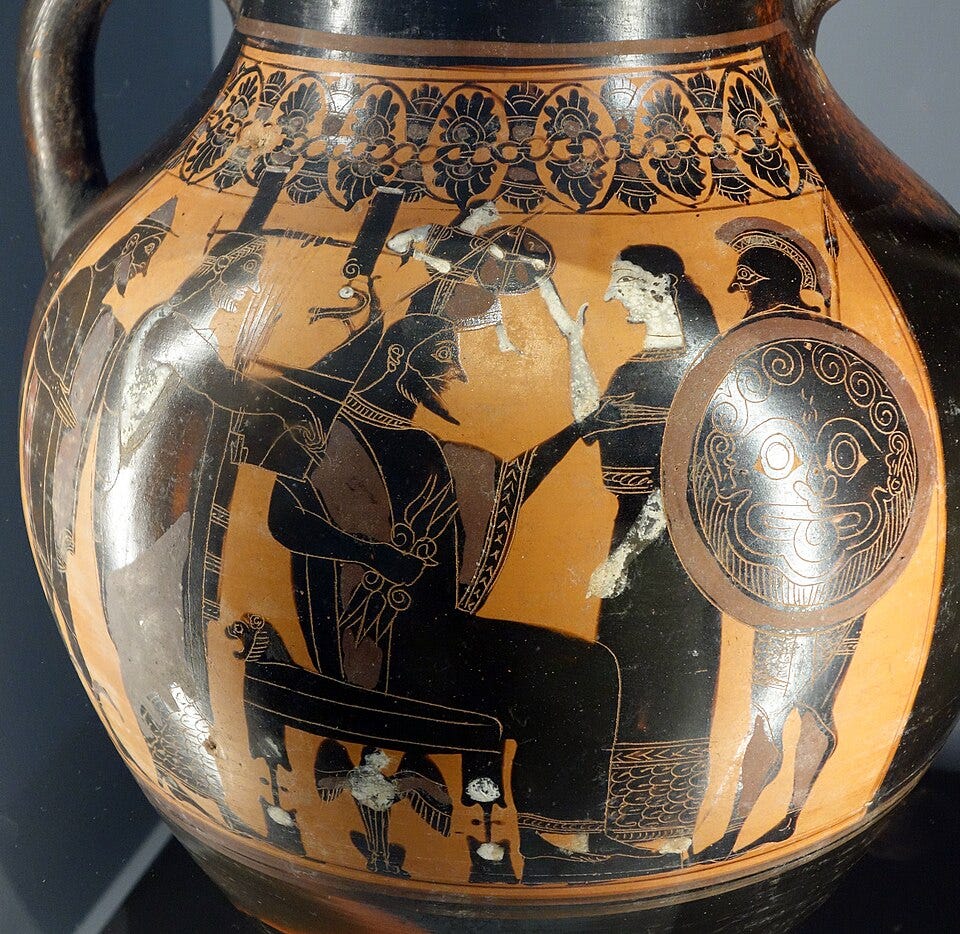
“Birth of Athena,” black-figure amphora, c. 550 BC. Boston Museum of Fine Arts.
How Athena was born from Zeus’ head
Stone Blind mentions this almost casually, like of course you already know Athena sprung fully formed from her father’s skull. I did not already know this. I knew Athena was Zeus’ daughter, but the specifics? Zeus swallowed Athena’s mother Metis (a Titan goddess of wisdom) because of a prophecy that her children would be more powerful than him. Classic Zeus move. Later, he developed a splitting headache, and Hephaestus (the god of the forge) cracked open his skull with an axe. Out came Athena, fully grown, in full armor.
The part that stuck with me: Zeus literally consumed the mother to claim the child. And then the mythology credits him as Athena’s sole parent. Metis gets erased. Knowing this makes Athena’s role in Medusa’s story hit differently. She’s a goddess who was herself born from an act of patriarchal consumption, and then she punishes another woman for being victimized by a god. The cycle is right there.
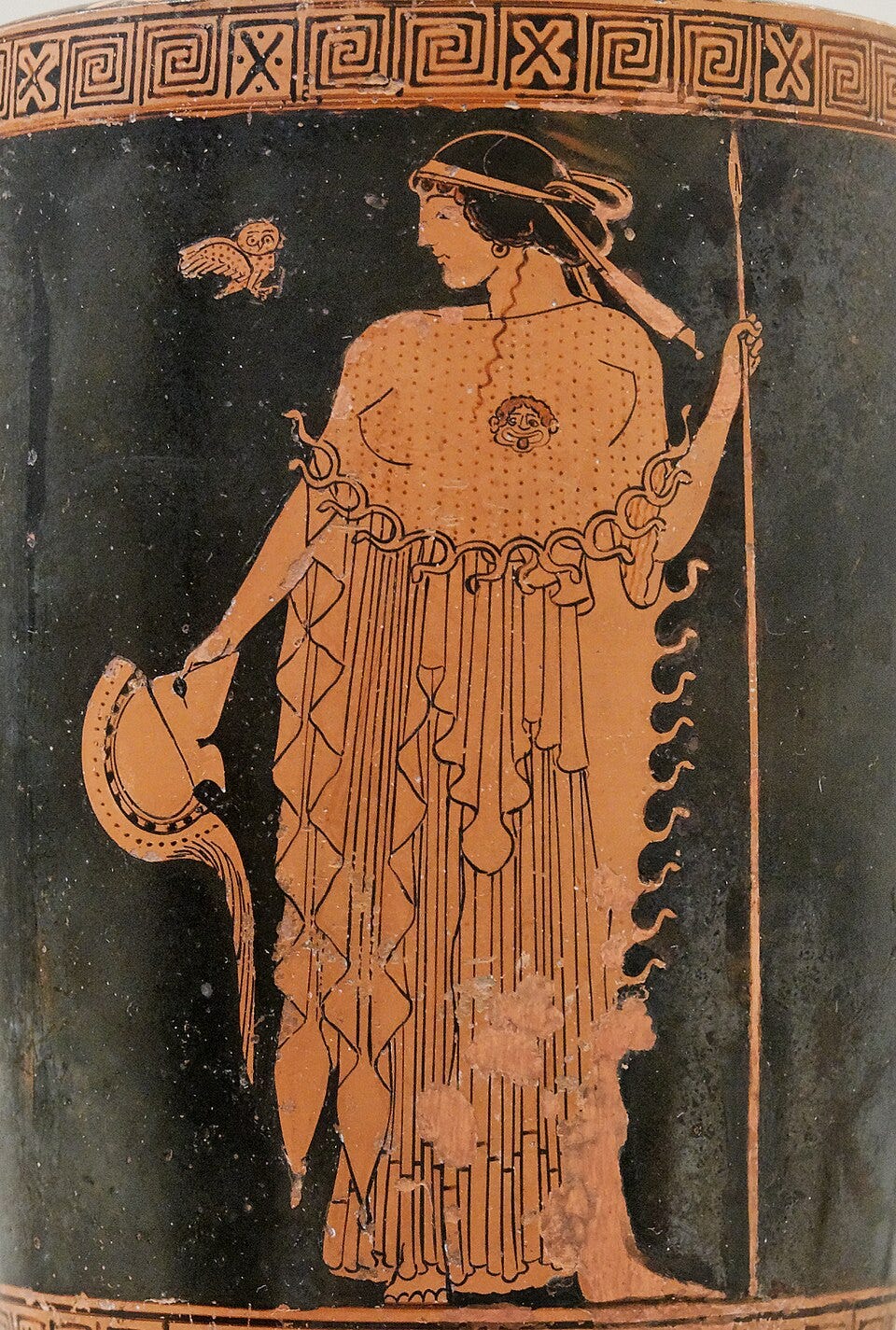
Athena with owl, detail from terracotta lekythos by the Brygos Painter, c. 490 BC. The Metropolitan Museum of Art, New York.
Athena’s owl
I knew owls were on ancient Athenian coins and that they symbolized wisdom. What I didn't know was that the Little Owl is literally named after Athena (Athene noctua) and was considered her sacred companion, representing the ability to see in darkness. The owl shows up in countless sculptures and became one of the most recognized symbols in Western civilization.
What I found interesting is that the owl-as-wisdom symbol isn’t just decorative. In some tellings, the owl gave Athena the ability to see the whole truth, even the parts hidden in shadow. Which makes it even more pointed that Athena, goddess of wisdom, chose not to see the truth of what happened to Medusa.
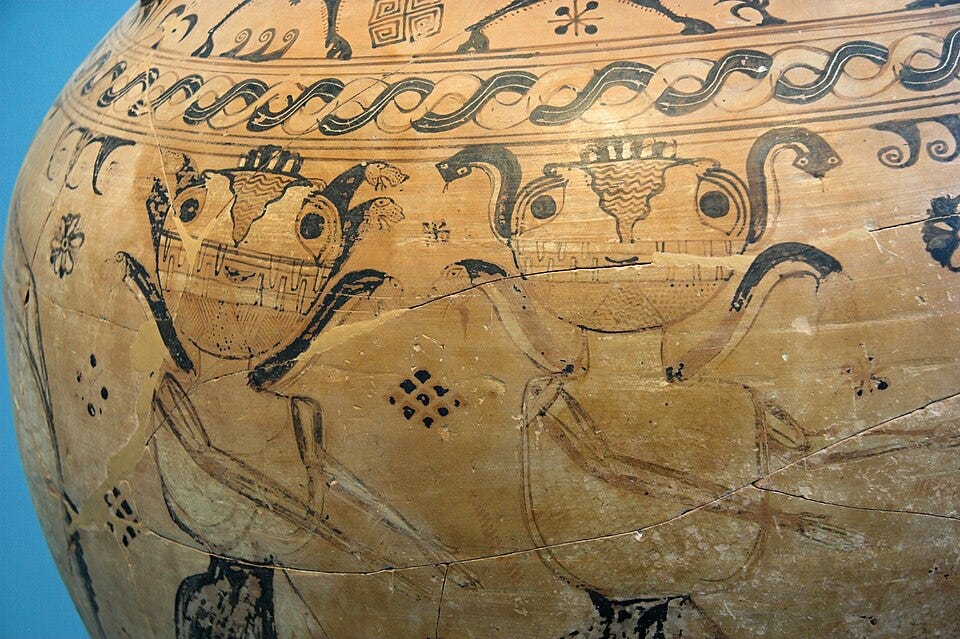
Stheno and Euryale chasing Perseus, detail from the Eleusis Amphora by the Polyphemus Painter, c. 650 BC. Archaeological Museum of Eleusis.
Medusa’s sisters and the connection to sea mythology
This is the rabbit hole that really got me. In Stone Blind, Medusa’s sisters Stheno and Euryale are the other two Gorgons. All three were sea creatures in the oldest versions of the myth, connected to a broader network of ocean mythology including the Graeae (the three gray sisters who shared one eye and one tooth) and various other sea-creature figures.
I started wondering: did The Little Mermaid or other ocean mythology stories in modern media take any inspiration from the Gorgon family tree? The connections are murky but fascinating. The Gorgons were daughters of Phorcys and Ceto, ancient sea deities. Phorcys and Ceto also parented the Graeae, the sea serpent Ladon, and Echidna (mother of many Greek monsters). So the Gorgons sit in this massive family tree of ocean-dwelling mythological creatures that predates almost every mermaid story we know.
Hans Christian Andersen’s original Little Mermaid draws more from Scandinavian folklore than Greek myth, but the broader tradition of dangerous, beautiful, powerful ocean women? That thread runs all the way back to figures like the Gorgons and the Sirens. The sea has always been the place where mythology puts its most threatening feminine figures. Medusa’s family tree is one of the oldest branches. I need to dig into this more.
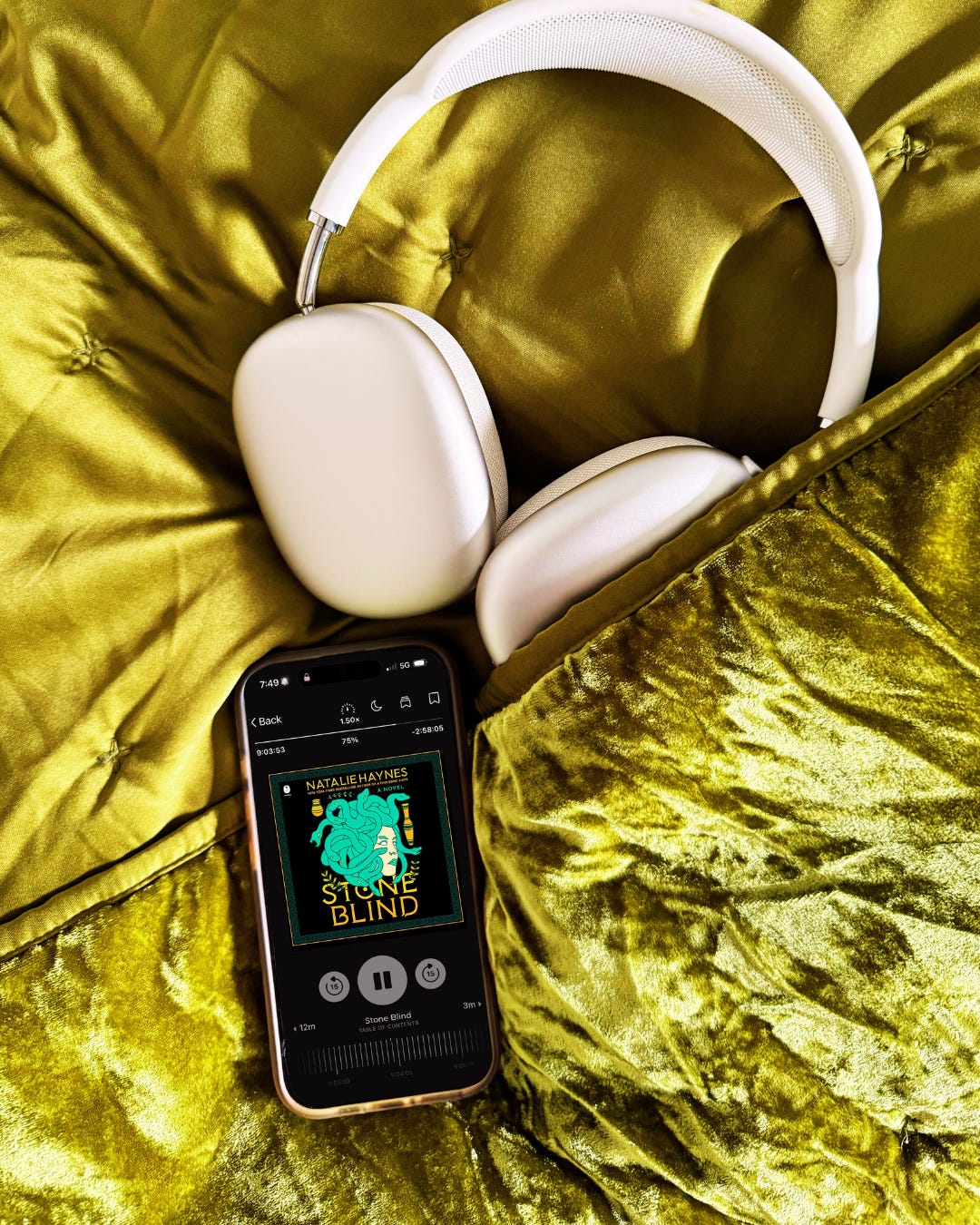
The review
Format: Audiobook | Source: Library | Rating: 4 stars
What Haynes pulls off is making you feel for Medusa from the very start, so that by the time the famous part of the story arrives, you read it as a wrong done to a person rather than a monster getting what it deserved. Along the way you get attached to some of the other gods and goddesses and grow to genuinely dislike others, which is half the fun. The narration carried it for me, strong with urgency and sarcasm and distinct character voices, and I devoured the whole thing because I needed to see how it landed even though I already knew where it was going.
Grab your own copy of Stone Blind
Library first, always. But if you're buying anyway, my Bookshop.org links back indie bookstores and a sliver comes to me. No pressure.
Now I want to hear from you, and the comment button is right there for it: what's a myth or story you grew up thinking you knew, then found out the real version was darker or stranger than the one you were told? Tell me in the comments.