


A five-star read that sent me down four separate Google holes about a war I somehow reached adulthood knowing nothing about. It’s Ana’s story, told start to finish in her own voice, and it pulled me under the same way Educated did. Then it sent me straight to the internet.
I picked up Girl at War because Julia Whelan narrated it. That’s it. That was the whole reason. I’ve been going through her audiobooks and this one popped up and I thought, sure, why not.
I didn’t even know what it was about.
Turns out it’s about the Croatian War of Independence, which is part of a larger set of conflicts I’d vaguely heard called “the Yugoslav Wars,” and I realized within the first few chapters that I knew almost nothing about any of it.
So I started googling.
What even were the Yugoslav Wars?
Okay so Yugoslavia was a federation of six republics in southeastern Europe that held together under Tito from after WWII until the early ‘90s. When it started falling apart, it fell apart violently. Croatia declared independence in 1991 and what followed was brutal. We’re talking ethnic cleansing, siege warfare, civilians targeted. The war in Croatia lasted until 1995, but the broader Yugoslav Wars stretched across multiple countries and conflicts through the decade.
I’ve probably read fifty WWII historical fiction novels. I’d never once picked up a book about this. And this was happening in the ‘90s. While I was alive. While I was old enough to have been paying attention.
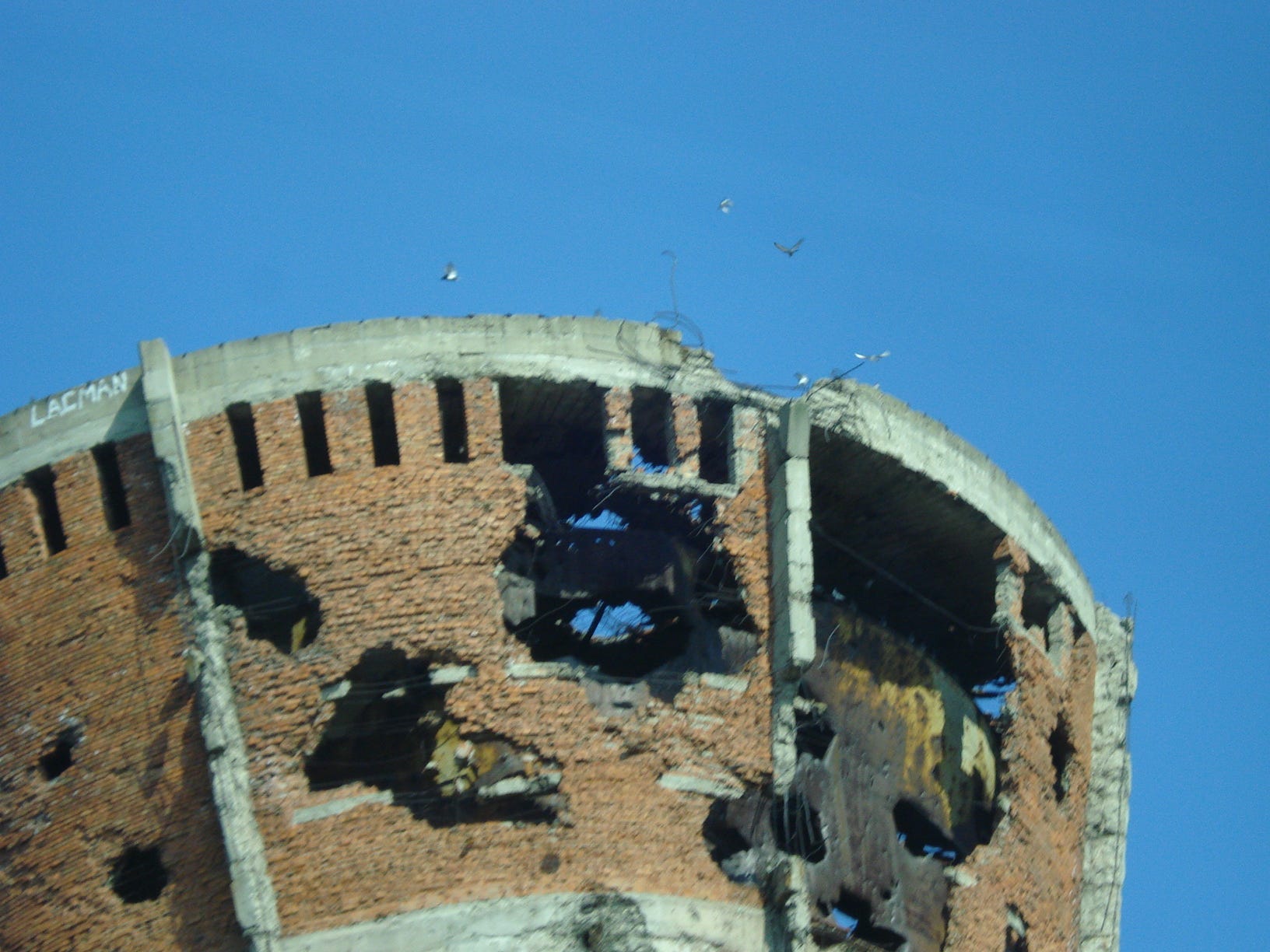
The Vukovar water tower, heavily damaged during the Croatian War of Independence (1991-1995). Photo by Seiya123
The cyclical violence thing
There's a line of thinking in the book about how the Balkans seem to cycle through conflict every fifty years or so. Different faces, different names, same patterns. I went down a rabbit hole on this and it's... a lot. The region has been a fault line between empires, religions, and ethnic groups for centuries. The Ottoman Empire, the Austro-Hungarian Empire, both World Wars, and then the breakup of Yugoslavia. It doesn't excuse anything, but it gives you context for why Ana's story feels so heavy. She's not just carrying her own trauma. She's carrying generations of it.
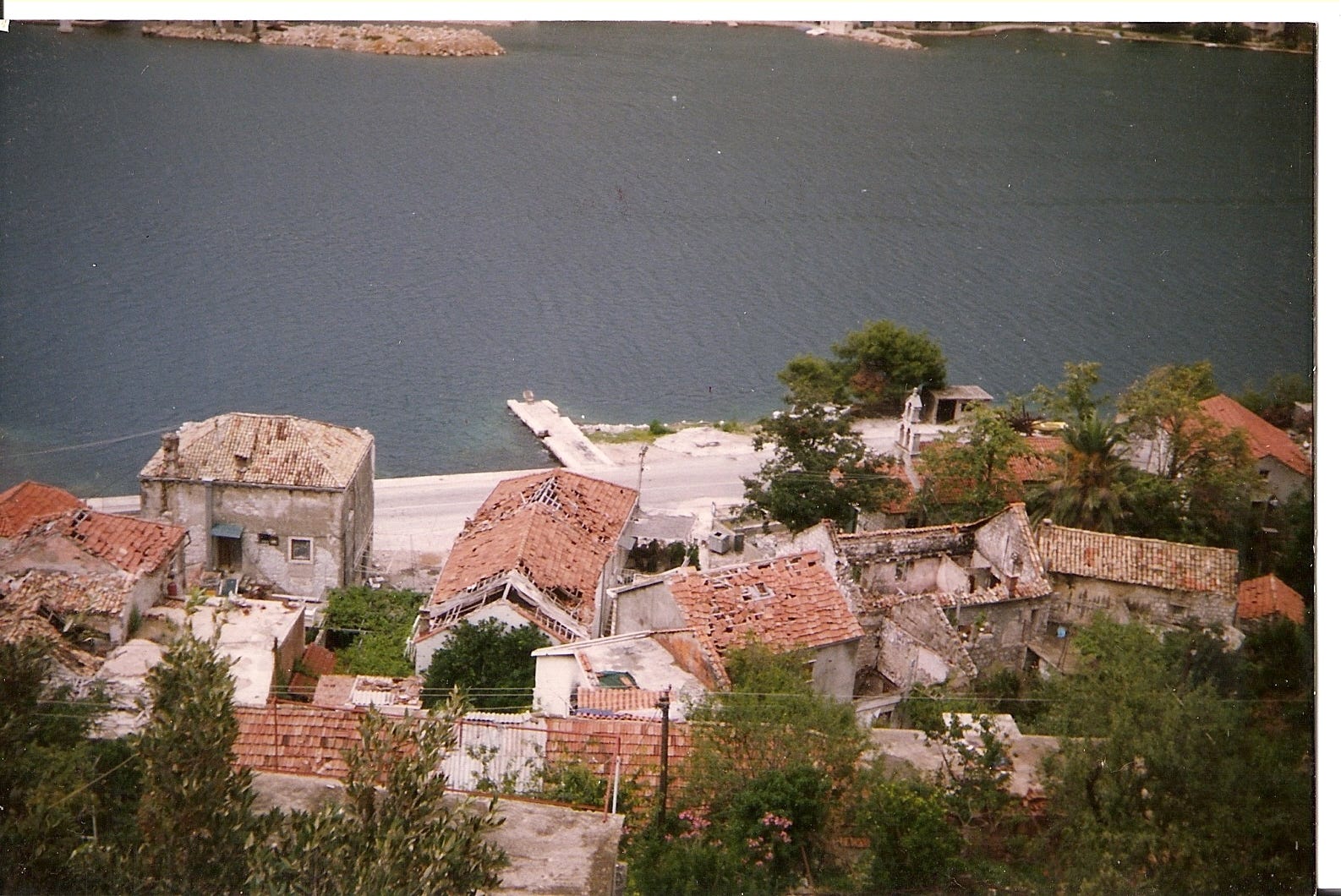
Damaged roofs in Sustjepan, a village near Dubrovnik, December 1991. Photo by Bracodbk
Black Lamb and Grey Falcon by Rebecca West
This book comes up in Girl at War because Ana is a literature student and her professor gives her books about the Balkans. Black Lamb and Grey Falcon is Rebecca West's account of traveling through Yugoslavia in the 1930s, right before WWII. It's supposedly this massive, sweeping look at the culture and history of the region. Published in 1941. It's on my reading list now.
Sara Novic’s other books
After finishing Girl at War I immediately went to look at what else Sara Novic has written. True Biz (2022) is about a school for the deaf and has really strong reviews. She's also an advocate for disability rights and Deaf culture. Totally different subject matter from Girl at War but I'm interested.
The thing I keep thinking about
I keep coming back to how much historical fiction exists about wars I know nothing about. I've been living in this WWII bubble and there are entire conflicts, entire countries' worth of stories, that I've never touched. This book cracked that open for me, and that's the part that earned the fifth star. It didn't just tell me a good story. It showed me a hole in how I read. I'm planning to put together a reading list of historical fiction set in the Balkans and beyond for anyone else who's been stuck in the same bubble.

The review
Format: Audiobook (narrated by Julia Whelan) | Source: Library | Rating: 5 stars
Structurally it moves between Ana’s childhood during the war and her life years later as a college student in the US, with flashbacks filling in what she can’t yet say out loud. Underneath the plot it’s about buried trauma, grief, and the lies we tell ourselves to keep functioning, and how all of that eventually comes unwound. It’s somber, and I was completely inside it the whole time, needing to know what happened next. My one complaint is that I wanted a book two. I finished it still wondering about Ana, her sister, and the people she left behind.
How I think about buying books: the library is always the right answer if it's an option for you. But some books you just want to keep. If this is one of those, my Bookshop.org link supports independent bookstores and tosses a few cents to me.
Now I want to hear from you, and the comment button is right there for it: what’s the war you know almost nothing about, the one your reading has somehow skipped right over? Tell me in the comments. I’m building that Balkans list next, and I’ll build the one after it from whatever you name.
Almost embarrassing to admit, but I learned nothing about any type of history in high school. We had one required class to take and it was taught by the football coach. So, instead of learning about events that shaped the world, we were taught pretty much about football. Fridays were free days because he was too busy worrying about that night's game to teach. (It was the early 90s - no one seemed to care about curriculum.) So I learned nothing about the World Wars, Vietnam, Cambodia, and certainly not the Yugoslav wars. Over the decades, I've educated myself about the major conflicts, but I'm like you - I still don't know much about the Balkans. I've put this book on my list, along with Rebecca West's (clocks in at 1200 pages!!). Thank you for sharing this - it sounds so interesting!
What a fantastic post!