


A five-star read, and my first of 2026, that only sent me down two Google holes, but both of them turned a novel into real history I couldn’t stop reading about. I was about a third of the way through The Black Swan of Paris by Karen Robards when I couldn’t hold off anymore. The main character, Genevieve, is a famous singer who uses her celebrity and travel access to secretly work for the French Resistance. And the whole setup felt too specific to be purely fictional.
So I Googled it: was the Black Swan based on an actual person?
That’s how I found Josephine Baker.
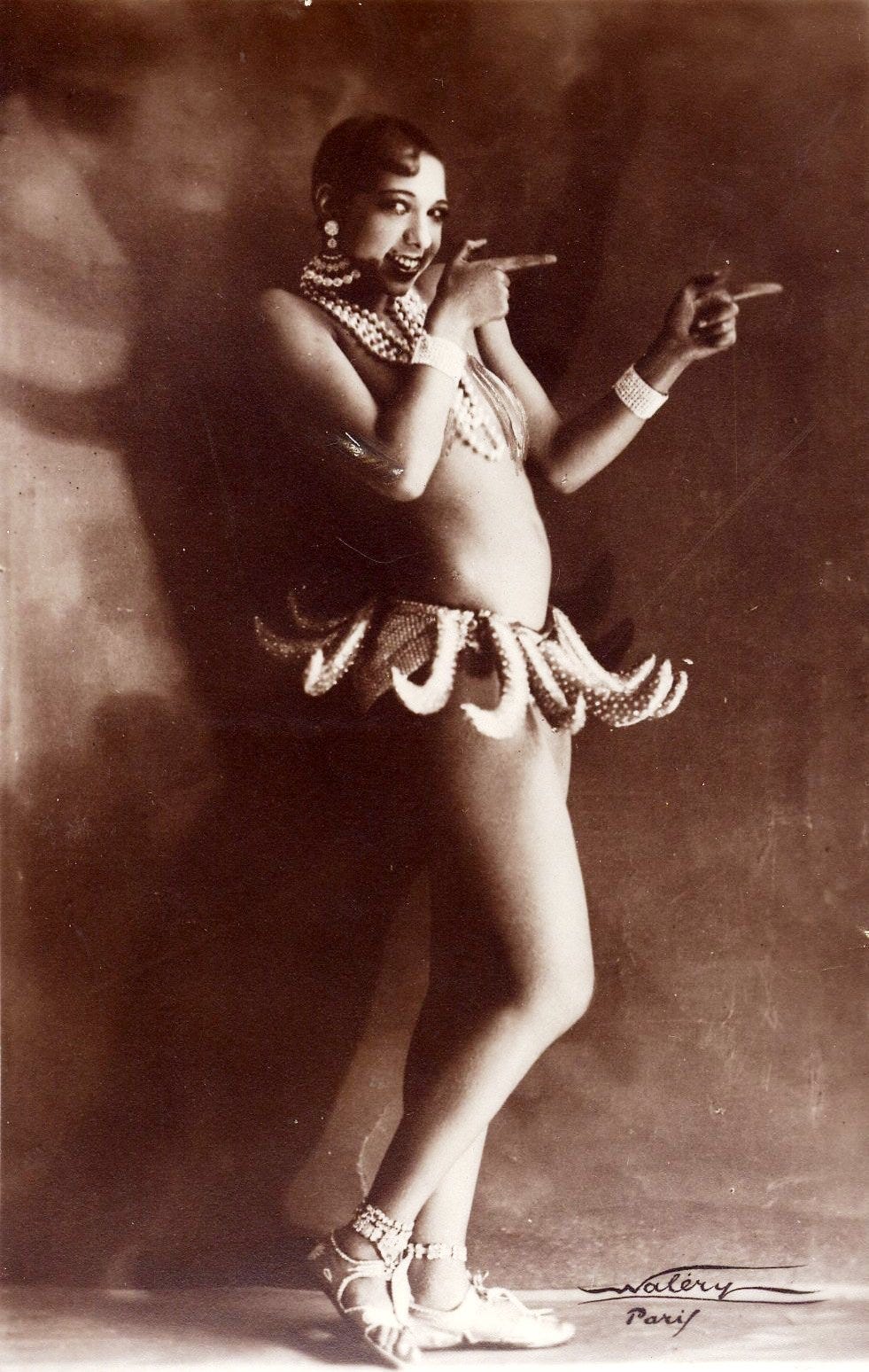
Josephine Baker in the banana skirt from the 1927 Folies Bergère revue "Un Vent de Folie." The fame this image gave her later became the cover for her Resistance work. Photo: public domain, via Wikimedia Commons.
Josephine Baker and the French Resistance
Baker was an American-born dancer and entertainer who became one of the most famous performers in France in the 1920s and 30s. She was also, secretly, a spy for the French Resistance during WWII.
She used her celebrity to travel to neutral countries, attend diplomatic events, and gather intelligence. She smuggled information written in invisible ink on her sheet music. She pinned notes inside her underwear. She used her fame as the cover, because nobody suspects the woman everyone’s watching.
Genevieve in the novel isn’t Josephine Baker. But the inspiration is unmistakable. A performer whose public life is spectacle and whose private life is resistance. Once I made the connection, every scene in the book where Genevieve moves th
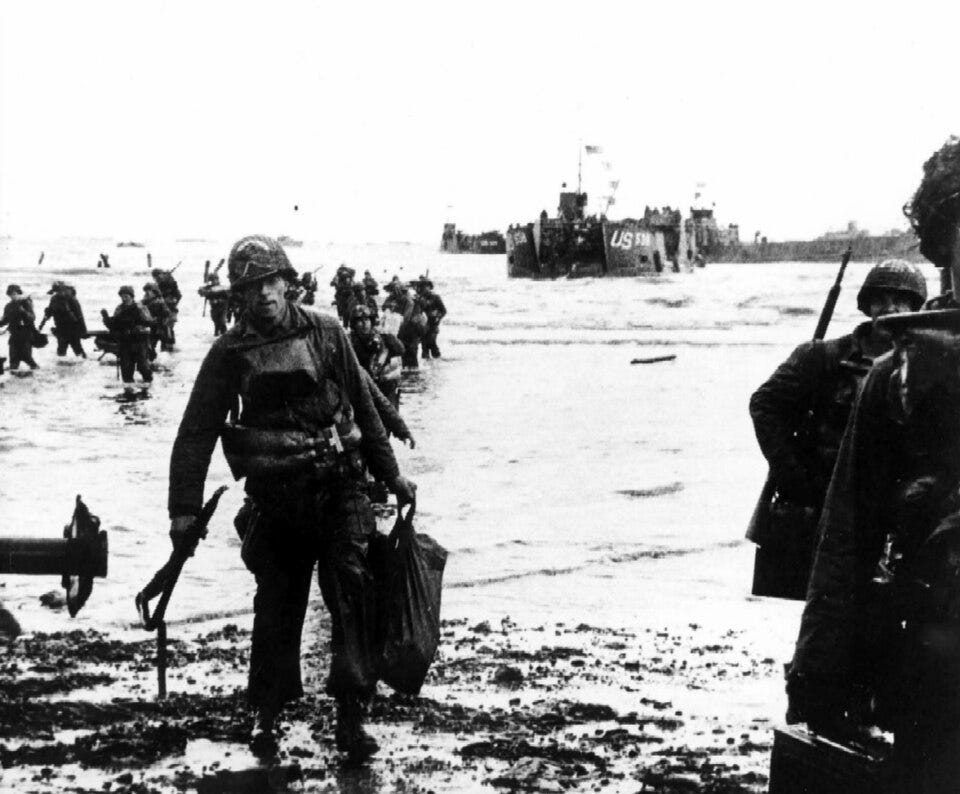
Carrying full equipment, American assault troops move onto Utah Beach on the northern coast of France, with landing craft jamming the harbor in the background. Photo: U.S. Army, National Archives (SC189902), public domain.
Utah Beach
Later in the book, a specific location comes up repeatedly and I realized I didn’t actually know enough about it. So I Googled Utah Beach.
Utah Beach was the westernmost of the five D-Day landing beaches on June 6, 1944. It was assigned to U.S. forces, supported by airborne divisions that dropped behind enemy lines the night before.
What surprised me was that Utah Beach was actually one of the more successful landings that day. Strong currents pushed the landing craft about a mile south of the intended target, which accidentally put them in a less-defended area. Brigadier General Theodore Roosevelt Jr. famously assessed the situation and decided to “start the war from right here” rather than trying to redirect to the planned landing zone.
Casualties at Utah were significantly lower than at Omaha Beach. That context helped me understand why the scenes set near the end of the book carried both tension and a thread of hope at the same time. There was danger, absolutely. But there was also this sense that survival was possible if everything lined up.
Why the real history matters
Some of the details vary depending on the source, and the novel takes its own creative liberties. But the bones of it are real. Real people risked their lives in exactly the ways this story describes. Real performers used their public personas as covers. Real soldiers landed on real beaches not knowing if they’d make it past the morning.
Once I knew that, The Black Swan of Paris stopped feeling like just a story and started feeling like it was pulled from actual lives people lived.
The review
Format: Audiobook | Source: Library | Rating: 5 stars
Seventeen hours on audio and it never once dragged. The narration is a big part of why, especially the French and German accents, and Robards writes scenes you can practically see staged in front of you. I hit the halfway mark sure the book had already peaked, and I was wrong. It kept deepening instead. Underneath all the tension runs a steady current of love, both romantic and familial, and a real hope rooted in the courage of the Resistance, which is what keeps the heartache from sinking it. This was my first Karen Robards and I’m already working through her backlist. One note going in: there’s wartime violence and real emotional loss here.
Grab a copy of The Black Swan of Paris.
A note on my links: I'm a library person first, always. If you can borrow it, borrow it. But if you're going to own a copy anyway, my Bookshop.org links support indie bookstores and send a little back my way. Both can be true.
Now I want to hear from you, and the comment button is right there for it: what's a novel that turned out to be standing on a true story, the one that sent you looking up whether it really happened? Tell me in the comments.